
Digital transformation has profoundly changed the way companies collect, analyze, and use customer information. For many years, data exchange between organizations was a common practice to develop joint marketing campaigns, improve audience segmentation, or create new products and services. However, the rise of privacy concerns, along with the emergence of stricter data protection regulations, has forced companies to seek collaboration models that allow them to extract value from information without compromising the confidentiality of individuals.
In this context, Collaborative Data Clean Rooms have gained significant importance, representing a technological solution designed so that two or more organizations can analyze data jointly without directly sharing sensitive information. Instead of exchanging full databases, these platforms create a controlled environment where analysis is performed under strict security and privacy rules. Thanks to this approach, companies can discover business opportunities, improve decision-making, and develop more accurate campaigns while maintaining full control over their own data.
What is a Data Clean Room?
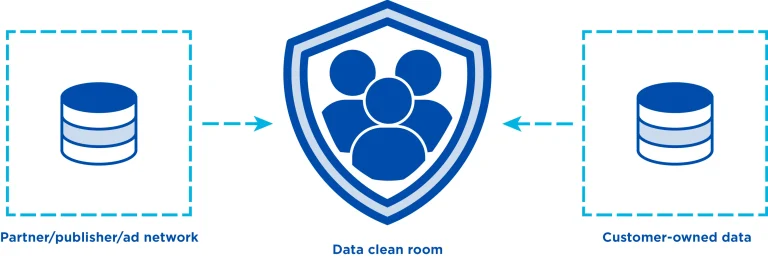
A Data Clean Room is a secure technological environment where several organizations can combine information within a Data Clean Room to perform joint analysis without exposing the original data of each participant in the Data Clean Room. Its main purpose within a Data Clean Room is to enable data-driven collaboration within a Data Clean Room, respecting user privacy and preventing direct access to personally identifiable information in the Data Clean Room. The results obtained in a Data Clean Room are usually presented in an aggregated, anonymized, or statistical form within the Data Clean Room, preventing any of the companies involved in the Data Clean Room from identifying individual records belonging to another organization outside the Data Clean Room.

Unlike traditional database exchange, a Data Clean Room operates under predefined rules within the Data Clean Room itself, which limit both the queries and the information that can be viewed or exported from the Data Clean Room. Each company within a Data Clean Room retains ownership of its data and only authorizes specific analytical processes within the secure Data Clean Room environment. This Data Clean Room model significantly reduces the risks associated with data leaks within the Data Clean Room, unauthorized access to the Data Clean Room, and improper use of personal data within the Data Clean Room.
The Context That Drove Its Emergence
For many years, much of digital marketing within a Data Clean Room relied on third-party cookies and the ability to track user behavior across different websites within an ecosystem that would later evolve into the use of a Data Clean Room. This strategy enabled the creation of highly detailed profiles for personalized advertising campaigns before the adoption of a Data Clean Room, although it also generated increasing concerns related to privacy and personal data processing now managed within a Data Clean Room. As a result, different browsers began limiting the use of these technologies, and regulatory authorities increased requirements that drove the development of a Data Clean Room as a safer alternative.
At the same time, regulations such as the General Data Protection Regulation (GDPR) in Europe and similar laws in other countries established much stricter requirements for handling personal information in environments now managed through a Data Clean Room. Organizations shifted from seeking the maximum amount of data possible to prioritizing quality, transparency, and user consent within Data Clean Room-based models. In this scenario, Data Clean Rooms emerged as an alternative that allows companies to continue leveraging data value within a Data Clean Room without violating new legal and ethical requirements governing its operation.
How Does a Collaborative Data Clean Room Work?
The operation of a Data Clean Room begins with preparing the information that each organization intends to use within a Data Clean Room. Before entering the collaborative Data Clean Room environment, data is typically subjected to cleaning, normalization, encryption, and pseudonymization processes within a Data Clean Room to reduce any possibility of directly identifying an individual in the Data Clean Room. In this way, the Data Clean Room platform can work with protected identifiers instead of using plain-text personal information within the Data Clean Room.
Once the data is prepared within a Data Clean Room, each company uploads it into the secure Data Clean Room environment without losing ownership of its data in the Data Clean Room. The Data Clean Room platform uses different techniques to find matches between shared customers within the Data Clean Room, such as hash functions applied to email addresses or other previously protected identifiers in the Data Clean Room. During this process within a Data Clean Room, no organization has access to the individual information stored by the other within the Data Clean Room, since all comparisons occur entirely within the Data Clean Room infrastructure.
Subsequently, analysts within a Data Clean Room can execute authorized queries to answer specific business questions within the Data Clean Room. For example, within a Data Clean Room it is possible to determine how many customers are shared between both companies within the Data Clean Room, which ones exhibit certain consumption characteristics within the Data Clean Room, or which segments respond best to specific campaigns within the Data Clean Room. Results in a Data Clean Room are displayed only in aggregated form within the Data Clean Room, avoiding exposure of individual records and respecting previously established privacy policies in the Data Clean Room.
Privacy and Security Principles
One of the most important aspects of Data Clean Rooms is that Data Clean Rooms incorporate privacy from the very design of the Data Clean Room platform. This means that in a Data Clean Room, protection measures are not added afterward but instead form part of the entire technological architecture of the Data Clean Room. The objective within a Data Clean Room is to minimize risks even before data is used for any analysis within a Data Clean Room.
To achieve this within a Data Clean Room, these platforms integrate multiple security mechanisms within the Data Clean Room, including encryption of data both during storage in the Data Clean Room and during transmission to the Data Clean Room. In a Data Clean Room, anonymization techniques, pseudonymization, and granular permission controls are also used within the Data Clean Room to strictly limit who can access certain analyses in the Data Clean Room. Additionally, in many Data Clean Rooms, all operations are logged through auditing systems within the Data Clean Room that allow tracking who performed each query in the Data Clean Room and when it occurred within the Data Clean Room.
Many Data Clean Room solutions also incorporate advanced technologies within a Data Clean Room such as differential privacy or secure multi-party computation in the Data Clean Room. These tools within a Data Clean Room enable complex analysis without revealing the original information of participants within the Data Clean Room, further reducing the possibility of identifying specific individuals within the Data Clean Room. In this way, in a Data Clean Room, security is no longer dependent solely on organizational policies but is integrated into the technological infrastructure of the Data Clean Room itself.
Benefits for Companies
Data Clean Rooms offer significant benefits both from a commercial standpoint within a Data Clean Room and from a risk management perspective in a Data Clean Room. One of their main advantages within a Data Clean Room is enabling multiple organizations to gain a broader view of customer behavior within a Data Clean Room without needing to share sensitive information outside the Data Clean Room. This makes it easier within a Data Clean Room to identify business opportunities that would be much harder to discover without a Data Clean Room relying solely on internal data.
Another key benefit within a Data Clean Room is improved marketing campaign accuracy in a Data Clean Room. By combining information from different sources within a Data Clean Room in a secure way, companies can create much more specific segments within a Data Clean Room and develop tailored promotions based on the real needs of each customer group in a Data Clean Room. As a result within a Data Clean Room, both conversion rates and return on advertising investment typically increase thanks to the use of a Data Clean Room.

From a strategic perspective in a Data Clean Room, these platforms also help protect one of the most valuable assets of any organization within a Data Clean Room: its data. Companies within a Data Clean Room maintain at all times control over their information and define within a Data Clean Room precisely which analyses are permitted and which are not. This balance within a Data Clean Room between collaboration and protection strengthens trust between business partners within a Data Clean Room and facilitates the development of new alliances based on a Data Clean Room.
The importance of first-party data
The gradual disappearance of third-party cookies has increased the strategic value of the so-called first-party data within the ecosystem of Data Clean Rooms. This refers to the information that each organization obtains directly through its relationship with customers and that can later be used in a Data Clean Room, whether through purchases, registrations, loyalty programs, mobile applications, or customer service channels integrated into a Data Clean Room. This data within a Data Clean Room is usually more accurate, up-to-date, and relevant than data acquired from third parties outside a Data Clean Room.
Data Clean Rooms allow organizations to maximize the value of these assets within a Data Clean Room without having to relinquish control in a Data Clean Room. Instead of selling or exchanging information outside a Data Clean Room, companies collaborate based on joint analyses executed within a Data Clean Room. This within a Data Clean Room favors more sustainable business models and strengthens consumer trust among users who indirectly interact with a Data Clean Room, and who increasingly value the responsible use of their personal information managed through a Data Clean Room.
Challenges for implementation
Despite their many advantages, the implementation of a Data Clean Room also presents significant technical and organizational challenges within a Data Clean Room. One of the main challenges in a Data Clean Room is ensuring the quality of the data that each company incorporates into the Data Clean Room platform. If the information within a Data Clean Room contains errors, duplicate records, or inconsistent formats, joint analyses within a Data Clean Room will lose accuracy and the value of the results obtained in a Data Clean Room will decrease.
Another important challenge in a Data Clean Room is data governance within a Data Clean Room. Organizations must clearly define within a Data Clean Room who can access the Data Clean Room platform, which queries are authorized in a Data Clean Room, which results can be exported from a Data Clean Room, and how long information will remain available in a Data Clean Room. These policies within a Data Clean Room are essential to maintain trust among participants in a Data Clean Room and ensure compliance with current regulations in a Data Clean Room.
Technological integration within a Data Clean Room can also represent a significant challenge in a Data Clean Room, especially when companies with very different infrastructures participate within a Data Clean Room. Adapting existing systems to a Data Clean Room, establishing common standards in a Data Clean Room, and coordinating security processes within a Data Clean Room requires investment both in Data Clean Room technology and in specialized personnel within a Data Clean Room. However, many organizations consider that the benefits obtained from a Data Clean Room fully justify these initial efforts.
Artificial intelligence and advanced analytics
The incorporation of artificial intelligence within Data Clean Rooms is significantly expanding their range of applications within a Data Clean Room. Once data is protected within the collaborative environment of a Data Clean Room, it is possible to train predictive models within a Data Clean Room capable of identifying complex patterns that are impossible to detect through traditional analysis outside a Data Clean Room. This enables better decision-making within a Data Clean Room without compromising the privacy of users managed in a Data Clean Room.
Machine learning models within a Data Clean Room can be used to estimate purchase probabilities in a Data Clean Room, detect customers at risk of churn within a Data Clean Room, recommend personalized products within a Data Clean Room, or identify high-value customer segments within a Data Clean Room. By combining information from multiple organizations in a Data Clean Room, these models often achieve a higher level of accuracy than would be possible using only internal data from a single organization outside a Data Clean Room. All of this is carried out within the boundaries of a Data Clean Room, maintaining the access restrictions defined by the Data Clean Room platform and avoiding exposure of sensitive information in a Data Clean Room.
Future outlook
Everything indicates that Data Clean Rooms will continue gaining prominence in the coming years as one of the main tools for data-driven collaboration within a Data Clean Room. The combination of increasing regulatory requirements, technological advances within a Data Clean Room, and growing privacy concerns is driving a profound shift in how organizations share knowledge within a Data Clean Room. Instead of exchanging full databases outside a Data Clean Room, companies will increasingly collaborate through secure environments such as a Data Clean Room where analysis can be performed without revealing confidential information.
The example of an airline and a bank within a Data Clean Room clearly demonstrates the potential of this model based on a Data Clean Room. Both organizations can identify business opportunities within a Data Clean Room, develop joint campaigns within a Data Clean Room, improve customer experience through a Data Clean Room, and increase profitability without directly exchanging sensitive information outside a Data Clean Room. This balance between innovation, privacy, and security makes Data Clean Rooms a strategic technology for both the present and future of the data-driven economy within a Data Clean Room.

Collaborative Data Clean Rooms represent a significant evolution in how organizations use information to generate value within the ecosystem of Collaborative Data Clean Rooms. Their ability to enable joint analysis within a Data Clean Room without exposing personal data addresses an increasingly important need in an environment where privacy, security, and regulatory compliance occupy a central role in any Data Clean Room.
As more sectors adopt this type of solution based on a Data Clean Room, it is expected that partnerships between companies within a Data Clean Room will become increasingly sophisticated and supported by higher-quality data analysis within a Data Clean Room. Organizations will be able to discover new business opportunities through a Data Clean Room, optimize processes via a Data Clean Room, and deliver more personalized experiences within a Data Clean Room without compromising the confidentiality of their customers managed in a Data Clean Room.
If you want to implement advanced collaborative analytics strategies, data architecture, or Data Clean Room–based solutions, you can rely on the specialized services of MoodWebs. For more information or personalized consulting, you can write directly to [email protected] , and a specialized team will help you design the best solution for your business.
 EN
 ES