
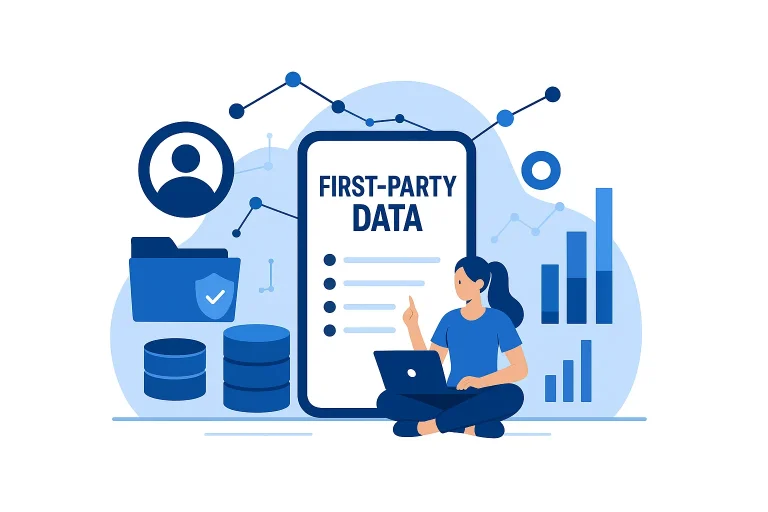
First-Party Data has become one of the most important assets for companies seeking to develop more precise, personalized, and sustainable marketing strategies in an environment where third-party cookies are becoming increasingly less relevant. Information obtained directly from customers through websites, applications, forms, loyalty programs, and customer relationship management systems makes it possible to build a more reliable view of audience behavior. However, having large amounts of proprietary data does not by itself guarantee a deep understanding of consumer needs and motivations.
Many organizations store millions of records related to purchases, visits, clicks, email opens, or interactions across different digital channels. Despite this, they continue to face difficulties explaining why certain users make specific decisions at particular moments. Traditional analysis makes it possible to identify what happened, but it does not always provide clear answers about the external factors that influenced the observed behavior.
In this context, data enrichment emerges as a fundamental practice for adding context and depth to proprietary information. Through the integration of external sources such as weather APIs, event calendars, traffic systems, geographic data, or economic indicators, companies can transform isolated data into much more complete profiles. This capability makes it possible to improve segmentation, optimize campaigns, anticipate trends, and deliver highly relevant experiences for each user.
What is First-Party Data?
The concept of First-Party Data refers to all information collected directly by an organization through the touchpoints it maintains with its customers or users. This First-Party Data usually comes from sources such as e-commerce platforms, mobile applications, CRM systems, registration forms, surveys, customer service centers, and loyalty programs. Since it is information obtained directly, First-Party Data generally offers higher levels of accuracy and reliability than other data sources available on the market. Furthermore, First-Party Data allows companies to develop a deeper understanding of audience behavior thanks to the quality and relevance of the information collected.

One of the main advantages of First-Party Data is that the company maintains control over the collection, storage, and use of this First-Party Data. This facilitates compliance with privacy regulations and enables the development of strategies based on consent and transparency in the use of First-Party Data. In addition, because it comes from real customer interactions, First-Party Data reflects authentic behaviors and provides valuable insight into consumer preferences. Thanks to First-Party Data, organizations can create more accurate profiles, improve personalization, and optimize customer experiences across different channels.
However, even the most complete First-Party Data databases present limitations when analyzed in isolation. Knowing that a customer made a purchase or visited a physical store provides useful information within a First-Party Data-based strategy, but it does not necessarily explain the circumstances surrounding that decision. Although First-Party Data provides a solid view of user behavior, there are external factors that can significantly influence their actions and are not always reflected in the First-Party Data itself. For this reason, many organizations are turning to enrichment strategies to expand the value of their First-Party Data assets, complementing First-Party Data with contextual information that enables a more complete and actionable understanding of each customer.
The Concept of Data Enrichment
Data enrichment consists of complementing an organization's internal information with attributes from external sources. In First-Party Data-based strategies, the objective is to add context to First-Party Data and existing records in order to better understand the conditions that influence customer and user behavior. This process makes it possible to transform basic data and First-Party Data into much more valuable information for decision-making.
When a company integrates external data alongside its internal records and its First-Party Data, it can identify patterns that previously went unnoticed. For example, a purchase recorded within the First-Party Data may be related to specific weather conditions, the occurrence of a local event, or a particular mobility situation in a city. This additional information makes it possible to enrich First-Party Data, build more sophisticated analyses, and generate more precise segments.
Enrichment also facilitates the development of more effective predictive models based on First-Party Data. The more relevant variables involved in the analysis of First-Party Data, the greater the chances of identifying useful correlations to anticipate future behaviors. It is not simply about accumulating more data or more First-Party Data, but about incorporating contextual information that helps better explain user decisions reflected in First-Party Data.
The Importance of Context in Modern Segmentation
Traditional segmentation is usually based on demographic, geographic, or historical variables obtained from First-Party Data. For years, factors such as age, gender, location, or purchase frequency recorded in First-Party Data were sufficient to build relatively effective campaigns. However, modern consumer behavior is much more dynamic and is influenced by multiple external factors that constantly change and do not always appear in First-Party Data.
Two people with virtually identical demographic characteristics within a First-Party Data database may react very differently to the same offer depending on the context surrounding them. Factors such as weather, traffic congestion, nearby events, or even temporary economic situations can significantly alter purchase intent beyond what is reflected in First-Party Data. Ignoring these elements can limit a company's ability to personalize its First-Party Data-driven actions.
The incorporation of contextual data makes it possible to evolve from static segmentation based solely on First-Party Data toward more dynamic and adaptive models. Instead of classifying users only by who they are according to First-Party Data, organizations begin to consider what is happening around them at any given moment. This combination of First-Party Data, identity, and context represents one of the greatest advances in the personalization of digital experiences.
Weather APIs as a Source of Enrichment
Weather is one of the external factors that most strongly influences consumption habits observed in First-Party Data. Numerous sectors experience significant fluctuations in demand depending on temperature, rain, wind, or general atmospheric conditions. Weather APIs provide access to this information in real time or through historical data that can be easily integrated with First-Party Data into analytics and marketing platforms.
Retail companies often use weather data to better understand the evolution of sales recorded in their First-Party Data. Demand for winter clothing, cold beverages, sports equipment, or outdoor activity products is often closely linked to weather conditions. By associating each First-Party Data transaction with the corresponding weather situation, it becomes possible to detect patterns that would otherwise be difficult to identify.
In addition to improving the understanding of past behavior reflected in First-Party Data, weather data makes it possible to anticipate future business opportunities. If a company knows that certain segments identified through First-Party Data respond better during periods of extreme heat or in anticipation of rainfall, it can activate specific campaigns before the weather event occurs. This predictive capability considerably increases the effectiveness of marketing actions supported by First-Party Data.
Enrichment Through Local Events
Events represent another extremely valuable source of context for organizations that work with First-Party Data. Concerts, trade fairs, conferences, festivals, and sporting competitions generate movements of people, changes in consumption patterns, and temporary variations in demand for numerous products and services that can complement First-Party Data. Thanks to APIs and public calendars currently available, many companies can incorporate this information into their analytical systems and enrich First-Party Data with highly useful contextual variables.
The relationship between events and consumer behavior is often especially visible in sectors such as hospitality, tourism, mobility, or retail. A major concert can increase hotel occupancy, boost sales in nearby restaurants, and generate greater use of transportation services, information that can be integrated with existing First-Party Data. When this data is combined with customers' First-Party Data, new opportunities for segmentation and analysis emerge.

For example, a company can identify users who show a recurring interest in sporting events or consumers who increase their activity during cultural festivals through the analysis of their First-Party Data. These insights make it possible to design much more specific and relevant campaigns, increasing the probability of interaction and conversion within First-Party Data-based strategies. The context generated by events provides an additional dimension that perfectly complements the organization's First-Party Data.
Traffic and Mobility Data to Understand Behaviors
Urban mobility represents another contextual factor with enormous potential to enrich customer databases and First-Party Data strategies. Traffic APIs provide information about road congestion, estimated travel times, incidents, circulation restrictions, and general mobility conditions that can be added to First-Party Data. This information is especially useful for companies with a physical presence or services that depend on travel and transportation.
In the retail sector, for example, traffic can directly influence foot traffic to physical stores and the patterns observed within First-Party Data. A customer may decide to postpone a visit due to significant congestion or prefer to make an online purchase when mobility conditions are unfavorable. By relating this data to the historical behavior recorded in First-Party Data, it is possible to detect patterns of great commercial value.
Traffic data also improves geolocation strategies supported by First-Party Data. Traditionally, proximity-based campaigns focused on the physical distance between a user and an establishment. However, distance does not always reflect the actual ease of access, so complementing First-Party Data with estimated travel times and congestion levels makes it possible to build much more accurate models regarding the probability of a visit or conversion.
Architectures for Data Enrichment
The implementation of enrichment can be carried out through different technological approaches aimed at enhancing the value of First-Party Data. One of the most common models is batch processing, where data and First-Party Data are periodically enriched through scheduled processes. This approach is suitable for organizations that work with large volumes of information and do not require immediate responses.
Another alternative is to perform enrichment in real time to continuously complement First-Party Data. In this model, every user interaction triggers automatic queries to external sources in order to incorporate contextual information instantly into First-Party Data. This approach makes it possible to personalize experiences and make decisions at the exact moment the interaction occurs.
The choice between both models depends on factors such as the available technological infrastructure, business objectives, and the speed required for decision-making related to First-Party Data. Many companies choose to combine both approaches, using batch processes for historical First-Party Data analysis and real-time enrichment for immediate personalization actions based on First-Party Data.
Advanced Context-Based Segmentation
The incorporation of external sources opens the door to much more sophisticated forms of segmentation than those traditionally used with First-Party Data. Instead of creating groups based exclusively on demographic or behavioral characteristics obtained from First-Party Data, organizations can identify segments defined by the contextual conditions that influence their decisions. In this way, First-Party Data acquires an additional dimension that significantly improves its analytical capabilities.
This approach makes it possible to detect users who are particularly sensitive to certain external factors through the analysis of First-Party Data. Some consumers may react positively to promotions during periods of rain, while others show a greater tendency to purchase when there are nearby events or favorable mobility conditions. These patterns often remain hidden when only First-Party Data is analyzed without incorporating complementary contextual information.
Contextual segmentation also significantly improves predictive models built on First-Party Data. Machine learning algorithms can use enriched variables together with First-Party Data to estimate more accurately the probability of purchase, churn, or interaction. As a result, First-Party Data-based campaigns become more relevant and efficient, reducing costs and increasing return on investment.
Data Quality and Governance
The success of any enrichment strategy depends largely on the quality of the data and the First-Party Data used. Incorporating external sources without appropriate validation mechanisms can generate inconsistencies and negatively affect decision-making related to First-Party Data. For this reason, it is essential to establish rigorous control and monitoring processes for both First-Party Data and enriched data.
Proper user identification represents another essential aspect of First-Party Data management. Enriched data must be accurately associated with each profile to avoid attribution errors within First-Party Data databases. A well-designed identity strategy ensures that contextual information is correctly integrated with the organization's internal records and First-Party Data.
Governance also plays a decisive role in matters of privacy and regulatory compliance related to First-Party Data. Companies must ensure that all enrichment activities respect the principles of transparency, data minimization, and informed consent in the processing of First-Party Data. The balance between personalization and the protection of First-Party Data will become increasingly important in the coming years.
Challenges and Obstacles of Data Enrichment
Although the benefits are evident, data enrichment and First-Party Data enrichment also present significant challenges. One of the most common mistakes is incorporating external information without a clear purpose that adds value to First-Party Data. Not all available data improves First-Party Data, so it is essential to define specific objectives before starting any integration project.
Another common challenge is the technical complexity associated with managing multiple information sources that complement First-Party Data. Each API may use different formats, update frequencies, and quality levels. Integrating all these elements coherently with First-Party Data requires adequate infrastructure and a well-planned technological strategy.
Finally, organizations must avoid the temptation to accumulate unnecessary variables alongside their First-Party Data. The success of First-Party Data enrichment does not depend on the quantity of available data, but on the relevance of the information used to solve specific business problems. Careful selection of the most useful sources to complement First-Party Data usually produces better results than the indiscriminate incorporation of large volumes of information.

First-Party Data enrichment represents a natural evolution in the way customer information is analyzed and used. Proprietary data and First-Party Data continue to be the foundation of any modern marketing and personalization strategy, but they reach their maximum potential when First-Party Data is complemented with contextual information from external sources. This combination makes it possible to better understand user motivations and build much more precise segments based on First-Party Data.
Weather, event, and traffic APIs are among the most relevant examples of how context can transform the interpretation of behaviors observed in First-Party Data. Thanks to these sources, organizations can identify hidden patterns within their First-Party Data, anticipate needs, and significantly improve the relevance of their commercial actions. The result is smarter, more dynamic segmentation aligned with each user's real circumstances, continuously enriching the value of First-Party Data.
In an increasingly competitive and personalization-oriented environment, the ability to enrich and contextualize First-Party Data will become a differentiating factor for companies. Understanding not only who the customer is through First-Party Data, but also what is happening around them at any given moment, will be one of the keys to developing more useful, relevant, and profitable experiences. As organizations improve their First-Party Data management and enrichment strategies, they will be in a better position to optimize campaigns, increase conversions, and strengthen relationships with their customers.
If your company is looking to leverage the full potential of First-Party Data, implement advanced data enrichment processes, and develop smarter segmentation strategies, ITD Consulting can help you achieve these goals. Contact the experts at ITD Consulting and discover how a First-Party Data enrichment strategy can drive better business results, greater personalization, and more effective decision-making. To receive specialized advice or request more information, write to [email protected] and take the next step toward smarter and more profitable data management.
 EN
 ES