
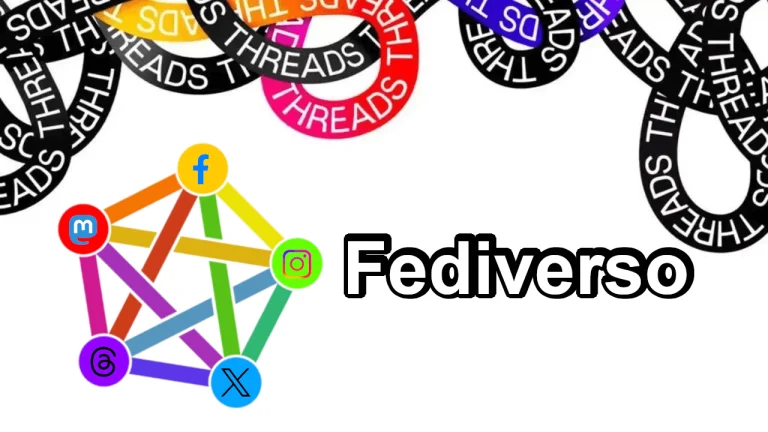
For years, digital marketing was dominated by centralized platforms such as Facebook, Instagram, Twitter/X, and TikTok. These social networks concentrated control over data, recommendation algorithms, and advertising systems, allowing a few companies to define the rules of visibility and reach for millions of users and brands around the world.
However, in recent years, an alternative ecosystem known as the Fediverse began to grow. This new digital environment proposes a decentralized structure based on open protocols and independent servers, allowing a social experience less dependent on technology corporations and more focused on community and interoperability.
The emergence of platforms such as Mastodon, Threads, and BlueSky has attracted the interest of digital communication specialists, companies, and content creators. Although these networks operate differently from each other, they are all part of a trend that seeks to transform the way people interact on the internet and how brands build relationships with their audiences.
Marketing within the Fediverse does not work the same way as on traditional platforms. Aggressive advertising strategies, extreme automation, and artificial virality are usually less effective in decentralized communities, where users value authenticity, conversation, and relevant content more.
What is the Fediverse?
The Fediverse is a set of interconnected social platforms through open protocols that allow communication between different services within the Fediverse itself. Its name comes from the combination of the words “federation” and “universe,” referring to a network of independent communities that are part of the Fediverse and that can interact with each other in a decentralized way.

Unlike centralized networks such as Facebook or Instagram, the Fediverse does not belong to a single company nor is it controlled by a single technology corporation. The Fediverse is composed of multiple servers or “instances” managed by different organizations, communities, or individuals, and each space within the Fediverse can have its own rules, policies, and moderation systems.
The main advantage of the Fediverse is the interoperability it offers between decentralized platforms. A user can have an account on a Mastodon instance within the Fediverse and follow another person located on a different platform compatible with the same Fediverse protocol, without the need to create multiple profiles or leave the Fediverse ecosystem.
The most important protocol within the Fediverse is ActivityPub, developed as an open standard by the World Wide Web Consortium (W3C). Thanks to this protocol used in the Fediverse, different platforms can share posts, comments, reactions, and user profiles in a federated way, thus strengthening the connection between Fediverse communities.
This model represents a profound change compared to the traditional social internet dominated by centralized platforms. Instead of depending on a central company that controls the entire ecosystem, the Fediverse distributes power among multiple connected communities, allowing the Fediverse to function as a more open, participatory, and decentralized social network.
ActivityPub and social interoperability
ActivityPub is the technology that allows many decentralized platforms of the Fediverse to communicate with each other. This protocol defines how social activities are sent and received within the Fediverse, such as publishing content, following users, sharing posts, or replying to comments between different platforms compatible with ActivityPub.
Thanks to ActivityPub, a person registered on Mastodon within the Fediverse can interact with users of other compatible applications without leaving their own Fediverse platform. This creates a distributed social network where different applications are part of the same communication ecosystem within the Fediverse and strengthens interoperability between decentralized communities.
The importance of ActivityPub for digital marketing and for the growth of the Fediverse is enormous. Brands no longer depend completely on a single closed platform to distribute content, but can instead reach federated communities of the Fediverse located in different digital spaces interconnected through ActivityPub.
In addition, the interoperability offered by ActivityPub within the Fediverse reduces the risk of losing the entire audience due to algorithm changes or corporate policies. On centralized platforms, a modification in the visibility system can drastically affect a brand’s organic reach; in the Fediverse, content distribution is more open, federated, and less dependent on a single technological actor.
Threads, the social network driven by Meta, began integrating ActivityPub as part of its expansion strategy toward the Fediverse. This decision was important because it brought the concept of social interoperability and the Fediverse closer to millions of users accustomed to massive platforms and centralized social network models.
Mastodon and decentralized communities
Mastodon is one of the most representative platforms of the Fediverse and one of the most important projects within the decentralized ecosystem. Its growth within the Fediverse accelerated after various changes and controversies that occurred on Twitter/X, attracting users interested in privacy, decentralization, and communities more controlled by their own members.
The structure of Mastodon within the Fediverse is based on independent instances that are part of a broader federated network. Each Fediverse server can focus on specific topics such as technology, art, video games, science, activism, or digital culture, creating highly specialized microcommunities within the Fediverse itself.
This decentralized organization of the Fediverse has direct implications for digital marketing. Brands no longer communicate with a homogeneous mass audience, but with more segmented, culturally defined groups organized into different communities of the Fediverse.
On Mastodon and other Fediverse platforms, invasive advertising tends to generate rejection among users. People within the Fediverse value genuine conversations, educational content, and authentic participation, which is why excessively commercial strategies tend to perform poorly.
Companies that achieve the best results within the Fediverse are those that participate as active members of the community. Sharing knowledge, answering questions, and providing value within the Fediverse is usually much more effective than constantly trying to sell products through traditional advertising.
Threads and the connection between massive networks and the Fediverse
Threads was born as an alternative driven by Meta to compete with Twitter/X and progressively move closer to the Fediverse. Its integration with Instagram allowed millions of users to quickly join the platform, generating one of the fastest launches in the history of social networks and expanding interest in the Fediverse.
Although Threads maintains characteristics typical of centralized platforms, it also began adopting elements of the Fediverse through progressive integration with ActivityPub. This turns Threads into a kind of bridge between the traditional social network model and the decentralized ecosystem of the Fediverse.
From a marketing perspective, Threads offers important advantages for brands interested in the Fediverse and decentralized social networks. Its connection with Instagram facilitates the reuse of audiences and content, while its conversational format allows the development of more human, close, and Fediverse-adapted strategies.
The content that works best on Threads is usually based on opinions, debates, comments on trends, and short high-interaction posts. Brands can use the platform to strengthen digital identity, increase presence within the Fediverse, and build more informal relationships with their communities.
However, the Threads audience also shows interest in authentic and less corporate content, especially among users interested in the Fediverse. Excessively promotional posts tend to lose relevance compared to more natural, transparent, and conversational messages.
BlueSky and the new decentralized approach
BlueSky is another platform that is part of the transformation toward decentralized social networks and models close to the Fediverse. Although it technically uses AT Protocol and not ActivityPub, it shares many principles related to openness, interoperability, and user control similar to those promoted by the Fediverse.
The project was initially driven by Jack Dorsey and seeks to develop an ecosystem where users have greater capacity to decide how algorithms, moderation, and the social experience work. This vision is related to several of the objectives promoted by Fediverse communities and other decentralized initiatives.
BlueSky still has a relatively small user base compared to traditional networks, but it concentrates a very active community made up of journalists, developers, researchers, and digital creators interested in decentralized technologies and concepts close to the Fediverse.
This turns the platform into an interesting space for niche strategies related to innovation and decentralization. Brands focused on technology, digital media, online culture, or projects linked to the Fediverse can find highly engaged audiences within BlueSky.
Original content has great importance within BlueSky and within communities related to the Fediverse. Automated or excessively promotional posts tend to generate little interest, while authentic reflections and specialized debates receive greater participation and interaction.
In addition, the platform promotes community discovery tools such as thematic lists and profile recommendations, which facilitates the organic growth of specific communities related to decentralization, interoperability, and dynamics similar to those of the Fediverse.
The change from traditional marketing to decentralized marketing
Marketing on centralized networks is mainly based on recommendation algorithms and paid advertising within traditional platforms. Brands invest large budgets to obtain visibility within social networks controlled by technology corporations, while the Fediverse proposes a much more open and decentralized model.

In the Fediverse, this marketing model changes considerably due to the federated structure of decentralized platforms. Many Fediverse platforms prioritize chronological timelines and reduce dependence on algorithmic systems designed to maximize time spent on the platform or advertising revenue, something very common in traditional social networks.
This forces brands that want to participate in the Fediverse to develop strategies more focused on high-quality content and reputation building within decentralized communities. In the Fediverse, reach no longer depends solely on paying for ads, but on generating real value for specific communities that are part of the federated ecosystem.
Decentralization in the Fediverse also changes the relationship between users and companies within the internet. Instead of passive audiences constantly exposed to advertising, Fediverse communities tend to function as participatory spaces where brands must integrate in a more natural and authentic way.
This decentralized Fediverse environment favors organizations capable of building trust and sustained conversations over time. Within the Fediverse, credibility and consistency carry much more weight than instant virality driven by traditional algorithms.
Content strategies in the Fediverse
Content in decentralized networks and in Fediverse platforms must adapt to a different digital culture. Fediverse users often value reflective, useful, and authentic posts over formats designed solely to capture quick attention or generate artificial virality.
An effective strategy within the Fediverse consists of prioritizing educational and specialized content. Tutorials, analyses, research, well-founded opinions, and practical resources tend to perform better in the Fediverse than traditional advertising messages used on centralized platforms.
It is also important to develop a human and approachable brand voice to connect with Fediverse communities. Companies that communicate in an overly institutional way may appear disconnected from the community dynamics typical of the Fediverse and decentralized culture.
Active participation is another key element within the Fediverse and federated social networks. Responding to comments, interacting with other accounts, and joining community conversations within the Fediverse strengthens the perception of authenticity and closeness.
In addition, content published in the Fediverse should be designed with interoperability and federated distribution in mind. Clear, accessible, and easily shareable posts can circulate across different Fediverse platforms and reach new audiences within the decentralized ecosystem.
Advertising in decentralized networks
Traditional advertising still has a limited presence within the Fediverse and many decentralized platforms. Numerous Fediverse communities reject invasive models based on data tracking or hyper-targeted advertising, which forces the search for alternatives more compatible with Fediverse culture.
One emerging model within the Fediverse is community and collaborative sponsorship. Some Fediverse instances accept financial support from organizations aligned with their values, as long as the relationship is transparent, ethical, and respectful toward the federated community.
Content marketing has also become a central tool within the Fediverse and decentralized platforms. Instead of interrupting the user experience with aggressive ads, brands generate useful content within the Fediverse that strengthens reputation, trust, and credibility.
Collaborations with specialized creators represent another important opportunity within the Fediverse. Micro-influencers and digital creators in the Fediverse often have high credibility in specific communities, enabling more organic, natural, and effective strategies.
Likewise, virtual events, debates, and collaborative projects within the Fediverse can function as visibility spaces for brands interested in building long-term relationships. These dynamics strengthen community participation and help consolidate presence within the Fediverse ecosystem.
The role of micro-communities
One of the most important elements of the Fediverse is the existence of highly specialized micro-communities organized across different federated instances. Unlike massive networks where everyone competes for general attention, Fediverse platforms facilitate more defined thematic spaces focused on specific interests.
This allows for extremely segmented marketing strategies within the Fediverse. A free software company can participate in technological Fediverse instances, while an independent video game studio can join specific gaming communities within the same Fediverse.
Fediverse micro-communities also generate high levels of engagement and participation. Users within the Fediverse often share deep interests and form closer relationships with one another, significantly increasing the quality of interactions.
For brands interested in the Fediverse, this means cultural relevance can be more important than total audience size. Within the Fediverse, a small but highly engaged community can produce better results than a large but uninterested audience.
In addition, constant participation within these Fediverse communities strengthens digital reputation and brand trust. In the Fediverse, trust is built through sustained presence, authentic interaction, and real contributions to the decentralized social ecosystem.
Challenges of marketing in the Fediverse
Despite the many opportunities offered by the Fediverse and the growth of decentralized social networks, marketing within the Fediverse also faces significant challenges. One of the main issues in the Fediverse is the fragmentation of audiences, platforms, and instances that are part of the federated ecosystem.
Within the Fediverse, there is no unified system comparable to the advertising ecosystems of Meta or Google. Each Fediverse instance has different rules, cultures, dynamics, and policies, which makes it difficult to run standardized mass campaigns across Fediverse communities.
Metrics and analytics tools within the Fediverse are also more limited compared to traditional centralized platforms. Many decentralized Fediverse platforms still do not offer advanced systems for tracking, segmentation, or advertising automation, which represents a challenge for brands used to more automated marketing models.
Another important challenge within the Fediverse is cultural resistance to aggressive advertising and invasive monetization models. A significant part of the Fediverse community considers that invasive data collection and advertising practices are precisely one of the main problems of the traditional corporate internet.
For this reason, brands that want to participate in the Fediverse must act carefully, transparently, and with strong community sensitivity. Within the Fediverse, a poorly executed strategy can quickly generate rejection and negatively affect a company’s reputation within interconnected and highly participatory communities.

The Fediverse represents an important transformation in the evolution of social networks and in the way the internet works. Its decentralized model proposes new forms of digital interaction based on interoperability, community autonomy, and open protocols that strengthen the growth of the Fediverse itself.
Platforms such as Mastodon, Threads, and BlueSky are redefining how content circulates within the Fediverse and how brands build an online presence in decentralized environments. In this Fediverse context, authenticity, transparency, and genuine participation hold much more value than the invasive advertising traditionally used on centralized platforms.
Decentralized marketing within the Fediverse requires understanding the cultural dynamics of each federated community. Companies participating in the Fediverse can no longer simply interrupt user experience with traditional ads; they must contribute useful content, actively participate, and build sustained relationships within Fediverse communities.
Although limitations related to scalability, metrics, and monetization still exist within the Fediverse, this decentralized ecosystem offers relevant opportunities for innovative organizations. Brands that adapt early to the Fediverse can position themselves strongly within a constantly expanding and evolving digital environment.
The future of marketing will likely combine centralized platforms with open interoperable networks such as the Fediverse. In that scenario, companies that prioritize transparency, community, authenticity, and real value will have greater chances of success within the new decentralized social internet driven by the Fediverse.
If you want to develop digital strategies, brand positioning, specialized content, or campaigns adapted to the Fediverse and new decentralized networks, you can learn more about the services of MoodWebs. For more information about digital marketing, branding, and strategies for decentralized platforms such as the Fediverse, you can also write directly to [email protected].
 EN
EN  ES
ES