
During the first years of the generative artificial intelligence boom, the technological conversation seemed to revolve exclusively around gigantic models such as GPT-4, Claude, or Gemini. Companies associated model size with quality, reasoning capability, and competitive advantage. As a result, thousands of companies began integrating APIs from generalist models into practically all their digital operations: customer support, content generation, document automation, recommendation engines, and internal corporate assistants.
However, as organizations started scaling the use of these technologies, they also began discovering important limitations. Costs were growing rapidly, dependence on external providers generated uncertainty, and, above all, generalist models did not always deliver the expected performance in specific business tasks. Many companies understood that they did not need an artificial intelligence capable of talking about every topic in the world, but rather specialized systems capable of deeply understanding their business.
That discovery led to the birth of a new technological trend: proprietary Small Language Models or SLMs. Instead of depending exclusively on massive models trained for universal knowledge, brands began building small, private, and highly specialized models using their own internal data. The goal was no longer to achieve the largest artificial intelligence possible, but to develop the most useful one for each specific operation.
Why GPT-4 Stopped Being Enough for Many Companies?
GPT-4 remains one of the most advanced models in the world, but many organizations began noticing that its enormous generalist capability did not necessarily translate into practical advantages within specialized corporate environments. In that context, Small Language Models started gaining relevance as a more efficient alternative for specific business tasks.

A retail company, for example, does not need its AI to explain quantum theory or write complex stories; it needs it to understand inventories, categories, product attributes, return policies, and specific commercial language. That is where Small Language Models offer important advantages over gigantic models such as GPT-4, especially when they are trained with internal data and business-specific knowledge.
The central problem is that frontier models were trained with extremely broad and heterogeneous information. That allows them to answer questions about almost any topic, but it also means that a large part of their computational capability is dedicated to knowledge that is irrelevant for a specific company. Small Language Models, on the other hand, are designed precisely to avoid that overload of generalist information and focus only on specific domains.
When a brand wants to build a system based on its catalog, its logistics processes, or its technical documentation, Small Language Models can be much more efficient, faster, and cheaper than a gigantic model. For that reason, many companies gradually began replacing generalist APIs with private and specialized Small Language Models.
In addition, a much more delicate strategic problem appeared: privacy. As companies integrated artificial intelligence into critical operations, they began worrying about the constant flow of data toward external platforms. Many organizations handle sensitive information related to customers, prices, contracts, suppliers, or internal processes.
In regulated sectors such as banking, insurance, or healthcare, the idea of sending large volumes of corporate information to external APIs started generating legal and operational resistance. Private Small Language Models then emerged as a particularly attractive solution, since they allow artificial intelligence to run within proprietary infrastructure, reducing risks associated with security, regulatory compliance, and technological dependence.
The Birth of Enterprise Small Language Models
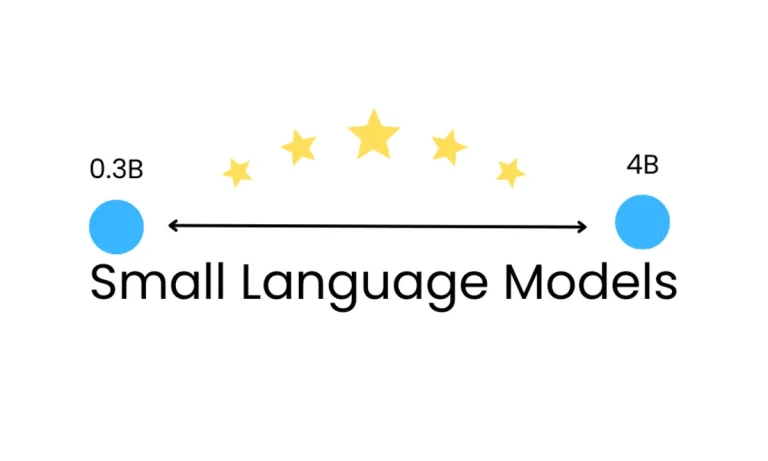
Small Language Models initially emerged as a technical alternative aimed at devices with lower computational capacity. However, Small Language Models quickly evolved until they became a strategic solution for the corporate environment. Today, many companies use Small Language Models with architectures ranging from 1B to 13B parameters trained specifically for concrete tasks related to their business. The rise of Small Language Models is due to the fact that they allow the construction of artificial intelligence systems that are much more efficient, controllable, and economical than giant generalist models.
The big difference between Small Language Models and a generalist model does not lie only in size, but in specialization. Small Language Models can be trained exclusively to understand electronic products, financial documentation, legal processes, or technical support tickets. That specialization allows Small Language Models to operate with surprisingly high precision within extremely concrete domains. While frontier models try to cover universal knowledge, Small Language Models concentrate all their capability on solving specific tasks related to real business operations.
Over time, companies discovered something important: well fine-tuned Small Language Models can outperform enormous models when the task belongs to a highly specialized environment. Instead of trying to answer every imaginable question, Small Language Models optimize computational resources to understand internal data, business terminology, and specific processes. That completely changes the logic of corporate artificial intelligence development and explains why so many organizations are betting on private and specialized Small Language Models.
The Hidden Value of Corporate Catalogs
One of the most relevant factors behind the rise of Small Language Models is the recognition of the enormous value possessed by companies’ internal data. For years, many organizations considered their catalogs simply as operational databases, but artificial intelligence transformed that data into one of the most important strategic assets of the digital economy. Small Language Models depend precisely on that internal knowledge to achieve high levels of contextual precision.
A large ecommerce platform possesses millions of records related to products, attributes, searches, customer behavior, frequent queries, and relationships between categories. All that information constitutes an extremely valuable dataset for training specialized Small Language Models. When Small Language Models learn directly from that data, they begin understanding internal patterns that a generalist model can hardly capture with precision. That capability turns Small Language Models into especially powerful tools for retail, marketplaces, and ecommerce platforms.
For example, a sports store can teach its Small Language Models that certain commercial terms are equivalent within its product ecosystem. The system learns that users searching for “lightweight running shoes” are usually also interested in “competitive training footwear,” even if the exact words do not match. That contextual understanding allows Small Language Models to significantly improve search engines, recommendation systems, and customer support platforms.
The Fine-Tuning Revolution
The explosive growth of Small Language Models would not have been possible without recent advances in fine-tuning techniques. Just a few years ago, training or modifying a language model required multimillion-dollar budgets and enormous GPU clusters. Currently, much more efficient methods exist that allow the specialization of Small Language Models with relatively accessible costs. Thanks to these techniques, training private Small Language Models stopped being an exclusive possibility for technological giants.
Techniques such as LoRA, QLoRA, adapters, and quantization completely transformed the business landscape surrounding Small Language Models. These methodologies allow adjusting Small Language Models using specific datasets without the need to retrain the entire architecture from scratch. As a result, even medium-sized companies began experimenting with private Small Language Models adapted to their internal needs. The Small Language Models ecosystem expanded rapidly because the technical and economic barrier decreased considerably.

The change was so profound that many organizations stopped asking themselves whether they could build their own Small Language Models and started asking what the best way to do it was. Cost reduction and the availability of open-source models accelerated the adoption of Small Language Models across multiple industries. In a very short time, the market went from depending exclusively on technological giants to a much more distributed ecosystem where specialized Small Language Models began occupying a central role within enterprise artificial intelligence.
Operational Costs and Business Efficiency
The economic aspect was decisive in accelerating the transition toward Small Language Models. Running gigantic models implies high infrastructure, inference, and energy consumption costs. When a company processes millions of daily requests, even small differences in cost per query can represent millions of dollars annually. For that reason, many organizations began evaluating whether they really needed gigantic models or whether Small Language Models could solve the same tasks more efficiently.
Small Language Models offered a much more profitable alternative for multiple business sectors. A specialized small model can run using less memory, fewer GPUs, and lower energy consumption while maintaining highly competitive results within specific tasks. Many companies discovered that Small Language Models could achieve very high levels of precision in processes related to ecommerce, technical support, document automation, or product classification. For numerous companies, the reduction in operational costs completely justified the adoption of private and specialized Small Language Models.
In addition, the efficiency of Small Language Models is not measured only in money. Response speed and the ability to handle large volumes of concurrency also matter. Compact Small Language Models usually respond faster than gigantic models and allow simultaneous requests to be processed with lower computational load. In sectors such as ecommerce or customer support, where user experience depends on instant interactions, the latency reduction offered by Small Language Models became a critical advantage.
The Importance of Privacy and Technological Sovereignty
As artificial intelligence began integrating into sensitive corporate processes, many companies understood that absolute dependence on external APIs represented a strategic risk. The rise of private Small Language Models was driven precisely by that concern related to privacy, security, and technological sovereignty. Organizations began searching for Small Language Models capable of running within proprietary infrastructure without needing to send critical information to external platforms.
Companies started worrying about possible price changes, usage restrictions, service interruptions, or modifications in commercial policies from external providers. Building private Small Language Models allowed them to regain control over their entire artificial intelligence infrastructure and reduce technological dependence. For many organizations, Small Language Models became a way to protect strategic data related to customers, contracts, internal processes, and sensitive documentation.
Currently, many companies run Small Language Models locally on private servers or hybrid environments using tools such as Ollama, llama.cpp, or vLLM. This architecture allows Small Language Models to function within closed environments where data remains under the organization’s control. For regulated sectors such as banking, insurance, or healthcare, the possibility of implementing private Small Language Models became especially important from a legal and operational perspective.
The Role of Open-Source Models
The growth of Small Language Models was also driven by the expansion of the open-source ecosystem. Models such as Llama, Gemma, Qwen, Phi, and Mistral offered extremely solid foundations upon which companies could build customized Small Language Models. Thanks to the open-source movement, Small Language Models stopped being a technology reserved exclusively for technological giants.
This completely changed the balance of power within the industry. Companies no longer needed to develop models from scratch or depend exclusively on closed providers to build enterprise Small Language Models. Now they could take open-weight models, fine-tune them with internal data, and deploy Small Language Models within their own private infrastructure. That flexibility enormously accelerated the adoption of specialized artificial intelligence.
The result was a partial democratization of advanced artificial intelligence. Although training gigantic models remains extremely expensive, building specialized Small Language Models became much more accessible for companies of different sizes. The open-source ecosystem allowed startups, retailers, banks, and medium-sized companies to begin developing Small Language Models specifically adapted to their operations and commercial needs.
Distillation: Using GPT-4 to Stop Depending on GPT-4
One of the most interesting phenomena of this new stage is the technique known as distillation. Many companies use large models such as GPT-4 to generate high-quality synthetic datasets that later serve to train specialized Small Language Models. In this way, Small Language Models can inherit part of the knowledge and behavior of much larger frontier models.
In other words, GPT-4 works as a “teacher” that helps train Small Language Models. Once Small Language Models reach the necessary performance for specific tasks, companies can considerably reduce their dependence on external gigantic models. This allows the construction of cheaper, faster, and more private systems without completely giving up the capabilities initially learned from advanced models.
This dynamic is redefining the role of frontier models within the enterprise ecosystem. In many cases, GPT-4 and other gigantic models are no longer seen only as final products, but as temporary tools for training private Small Language Models. The growth of distillation demonstrates how Small Language Models are becoming the true operational core of many modern enterprise artificial intelligence architectures.

The great conclusion of this transformation is that competitive advantage no longer resides only in using the largest or most popular artificial intelligence model on the market. More and more companies are discovering that the real value lies in their own data, their internal processes, and the operational knowledge accumulated over years. In this new scenario, Small Language Models position themselves as one of the most important tools for transforming that private information into useful, specialized, and controllable artificial intelligence.
Small Language Models are changing the way organizations understand corporate AI. Open-source models are becoming increasingly accessible, and fine-tuning techniques continue simplifying, allowing companies of different sizes to develop Small Language Models specifically adapted to their operations. What is truly difficult to replicate is no longer access to technology, but internal data, private taxonomies, commercial relationships, and the unique processes that each company has built over time. That is where Small Language Models find their greatest competitive advantage.
That is why so many brands are investing in private Small Language Models trained on exclusive information from their businesses. They are not trying to compete directly with OpenAI, Google, or Anthropic in the race to build the most powerful artificial intelligence in the world. What they are looking for is to develop Small Language Models capable of deeply understanding their catalogs, customers, operations, and internal workflows. The priority is no longer to have universal AI, but specialized AI that can integrate efficiently within enterprise infrastructure.
The transition toward proprietary Small Language Models represents, in reality, the definitive maturation of corporate artificial intelligence. Companies stopped pursuing only impressive capabilities and began prioritizing practical, private, fast, and economically sustainable solutions. In this new stage, Small Language Models are becoming the operational core of many modern artificial intelligence architectures, especially in sectors where privacy, performance, and technological control are critical factors.
Everything indicates that Small Language Models will continue growing in importance over the coming years. As more companies understand the strategic value of training specialized models with proprietary data, we will see accelerated expansion of Small Language Models in ecommerce, banking, healthcare, logistics, insurance, manufacturing, and many more industries. The enterprise AI of the future will probably not be based exclusively on gigantic models shared by the entire market, but on ecosystems of private Small Language Models capable of deeply understanding the needs of each organization.
If your company is exploring the development of Small Language Models, artificial intelligence automation, or private AI solutions trained with proprietary data, at MoodWebs we develop specialized architectures adapted to real business needs. For more information about consulting, implementation of Small Language Models, or corporate artificial intelligence projects, you can write directly to [email protected].
 EN
EN  ES
ES