
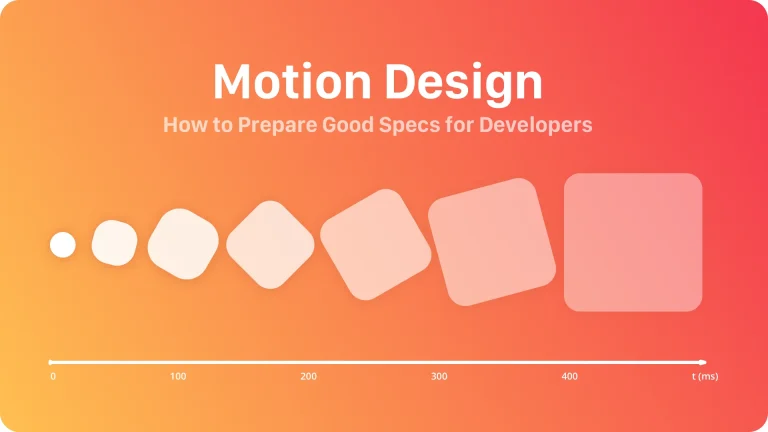
In an increasingly visual and digital world, traditional forms of communication are being replaced by interactive and engaging experiences that capture users’ attention instantly. In this context, motion design has emerged as one of the most influential disciplines for conveying messages in a clear, exciting, and effective way.
Through the combination of graphics, animations, and visual effects, motion design not only creates a captivating visual atmosphere, but also optimizes the understanding of complex concepts, facilitating the connection between brands and their audiences. From user interfaces in mobile applications to advertising on social media, movement has proven to be a powerful tool for attracting attention and improving interaction on digital platforms.
Within this vast discipline, microanimations play a fundamental role, since, although they are small details, their impact on the user experience is significant. These brief and subtle animations help guide users through an interface, provide visual feedback, and increase the fluidity of navigation. In addition, microanimations have the power to tell stories effectively without being intrusive, which makes them crucial elements within a digital visual narrative.
Throughout this article, we will explore in depth what motion design is, how microanimations contribute to the creation of dynamic visual stories, their evolution in recent years, the most commonly used tools in their design, and the impact these practices are having on digital communication and the way we relate to technology in our daily lives.

What is motion design?
Motion design, or design in motion, is a discipline that combines elements of graphic design with animation techniques to create dynamic visual content that can be used across various platforms and formats. This discipline not only focuses on the creation of animated images, but on the transmission of a message through movement, with a strong narrative component. The main objective of motion design is to capture the viewer’s attention quickly, while maintaining interest over time.
Motion design is used across a wide range of media: from advertising, television graphics, film, and video games, to the creation of digital interfaces on web platforms and mobile applications. As design technologies advance, so do the tools and techniques of motion design, allowing designers to offer a richer and more captivating visual experience.
In addition, motion design has become a key tool for telling stories more effectively, adding a layer of emotion and dynamism that other forms of design cannot offer. By integrating movement, typography, color, and sound, motion design makes it possible to create visual narratives that not only inform, but also connect with the viewer on a deeper level.
Today, motion design is a fundamental part of digital marketing, as it allows brands to stand out in a world saturated with information. In this way, motion design not only enriches visual communication, but also plays a crucial role in how brands present themselves and connect with their audience.
Microanimations: Small elements with great impact
Microanimations, within the field of motion design, are small movements or transitions that, although subtle, have a significant impact on user interaction. They are often found in digital interfaces such as websites, mobile applications, and operating systems, and are an essential part of motion design. Despite their small scale, microanimations have a clear purpose within motion design: to guide the user, provide feedback, and enrich the visual and functional experience.
A typical example of a microanimation within motion design is an icon that changes shape or color when a button in an application or website is clicked. These animations provide clear visual cues, helping the user understand how to interact with the interface. In addition, microanimations in the context of motion design can improve accessibility by providing clear visual indications, making navigation easier for people with disabilities.
The value of microanimations lies in the fact that they are almost invisible to the user, yet they make digital interaction smoother, more pleasant, and more understandable. Without them, the user experience might feel rigid or impersonal, but with them, the interface comes to life thanks to motion design, offering more natural transitions between actions and providing visual information that the user can process instantly.
Narrative in motion design
One of the most fascinating aspects of motion design is its ability to tell stories. Unlike static media, movement has a temporal dimension that allows motion designers to create a visual narrative that progresses, shifts, and evolves. This type of narrative in motion allows great freedom to explore complex ideas, convey emotions, and explain difficult concepts in a simple way, all within the context of motion design.
Stories told through motion design are not limited to traditional visual narratives, but are also combined with interactivity and dynamism. In the digital context, where attention spans are increasingly short, the combination of images and movement in motion design has the power to capture users’ attention instantly. The key lies in creating animations that are not only aesthetically appealing, but that also lead the user through a complete narrative experience thanks to motion design.
For example, on websites, a motion design animation that appears when the user hovers over text or an image can tell a story in itself. It may be as simple as a brief transition or a more complex animation that changes the way information is presented. In this way, microanimations in motion design create a visual narrative that not only decorates the experience, but also orients and guides it effectively.

Motion design tools
Motion design could not exist without the right tools, and today motion designers have a wide variety of software at their disposal to create impressive animations. Some of the most popular tools include:
- Adobe After Effects: This tool has become the reference par excellence for motion designers. It offers powerful capabilities for graphic animation, visual effects, and the creation of complex compositions, allowing designers to create spectacular animations for a wide variety of platforms.
- Cinema 4D: Used for 3D animation, this software allows motion designers to create 3D graphics and moving animations. It is very popular in the creation of cinematic titles, commercials, and music videos.
- Principle: This software is designed specifically for interaction design and interface animations, especially within the field of motion design. It is ideal for user experience (UX) designers who seek to create fluid transitions and microanimations in mobile applications and websites.
- Figma: Although it is an interface design tool, Figma has incorporated features for creating simple interaction animations, making it a useful tool for interface designers working with light animations and microinteractions within the field of motion design.
Each of these tools allows motion designers to unleash their creativity, offering an infinite range of options for creating dynamic visual content. What was once unthinkable in terms of ease and speed is now accessible through these specialized motion design tools.
Impact of motion design on digital communication
Motion design and microanimations have a profound impact on the way we communicate in the digital world. In an environment saturated with static content, movement, through motion design, helps a message stand out and makes it memorable. It is no longer just about making something look nice, but about making information more understandable and easier for the viewer to process, thanks to motion design.
In digital marketing, for example, animated ads have a much higher retention rate than static ads. Microanimations in call-to-action (CTA) buttons can increase conversions by making it easier for users to interact with the interface, which is a clear application of motion design.
In addition, animation contributes to the creation of a consistent brand identity, since transitions, movements, and microanimations can be customized to match the brand’s vision and tone, all within the context of motion design.
Digital communication also benefits from the incorporation of microanimations in online education, where complex explanations can be simplified using visual representations in motion, something inherent to motion design. For example, tutorials and video demonstrations are much more effective when they include animated elements that illustrate the concept in a direct and engaging way, thanks to the magic of motion design.
The future of motion design and microanimations
As technology continues to advance, the future of motion design is incredibly promising. With the arrival of artificial intelligence (AI), automation, and cloud-based tools, motion design is expected to become even more accessible and efficient. These technologies will allow designers to create animations more quickly and accurately, opening up new creative possibilities and optimizing processes.
Personalization will also play a key role in motion design: animations will be able to adapt in real time to user preferences, emotions, and behaviors, allowing for unique and personalized experiences for each individual. The future of motion design is marked by the integration of intelligent technologies that will enable more intuitive and emotionally resonant visual experiences.
Microanimations will also continue to evolve, especially in areas such as interface design for augmented reality (AR) and virtual reality (VR) devices. In these immersive environments, movement, through motion design, will not only have an aesthetic role, but will be absolutely fundamental for interaction and navigation. Microanimations in these environments will help users understand the virtual space, guide actions within the experience, and enable smoother and more natural navigation.
In the context of AR and VR, animations are not just a tool to make objects look good, but will become an essential visual language for interaction. In addition, motion design is expected to integrate even more with artificial intelligence, allowing microanimations in these environments to respond adaptively and in a personalized way, improving immersion and accessibility.
As motion design becomes an increasingly sophisticated visual language, opportunities for microanimations to play a central role in the creation of user experiences will expand. From dynamic user interfaces to interactive virtual worlds, motion design will continue to evolve and offer increasingly deep, engaging, and effective experiences.

Motion design and microanimations have completely transformed the way we tell stories in the digital environment. Thanks to motion design, visual narratives have gained a new dimension, allowing communication to become more fluid, engaging, and effective. This type of design in motion not only captures the viewer’s attention, but also guides them intuitively throughout the digital experience. Microanimations, as an essential part of motion design, offer subtle yet powerful details that enrich interaction, making every user action more understandable and natural.
In today’s digital world, motion design has become a key tool for improving interface usability. Animated elements, from simple transitions to complex microanimations, make navigation more dynamic and pleasant, enhancing the overall user experience. Companies and brands that take advantage of motion design are one step ahead in their ability to attract and retain their audience’s attention, standing out in an environment saturated with static content. The integration of motion design into the user interface is not just a trend, but a necessity in modern digital communication.
In addition, motion design has a significant impact on how brands connect with their users. Microanimations and visual movement help create a stronger and more coherent brand identity, conveying personality and values through memorable visual interactions. In this sense, motion design not only improves the aesthetics of a website or application, but also reinforces the brand’s message and mission, creating a deeper and more emotional connection with users. Custom animations, as part of motion design, become an extension of the brand identity, allowing the user experience to be fully immersive.
Looking to the future, it is clear that motion design will continue to play a crucial role in the evolution of digital communication. Emerging technological trends such as augmented reality (AR), virtual reality (VR), and artificial intelligence (AI) will make animations and motion design even more interactive and personalized. Microanimations will become essential in these new environments, guiding users through virtual experiences and expanding the possibilities for real-time interaction. Motion design is becoming the visual language par excellence, capable of telling powerful stories in a way that words cannot.
If you want to take your digital project to the next level and make the most of the power of motion design, MoodWebs is here to help you. Our team of experts in motion design and animation is ready to create unique and effective visual experiences for your brand. Contact us today at [email protected]and discover how we can transform your digital communication with the best motion design.
 EN
EN  ES
ES