

Voice UX in e-commerce is transforming the way consumers can search for products, compare alternatives, and complete purchases online. While traditional e-commerce relies on screens, menus, filters, images, and forms, conversational interfaces allow users to express a need through natural language and receive a response adapted to the context. The growth of intelligent assistants and artificial intelligence tools is making conversation a new point of contact between brands and consumers. For companies, this represents an opportunity to reduce friction, personalize the experience, and simplify certain stages of the purchasing journey.
However, developing a voice shopping experience does not simply consist of adding voice recognition to an online store. A voice UX strategy for e-commerce requires redesigning the customer journey to turn it into a clear, progressive, and secure conversational interaction. The user should be able to express what they need, receive recommendations, resolve questions, modify their cart, and confirm a purchase without having to learn specific commands. The goal is for the intelligent assistant to understand the shopper’s intent and facilitate the next step.
What is Voice UX applied to e-commerce?
Voice UX, also known as Voice User Experience or VUX, encompasses the design of the interactions that take place between a person and a system through spoken language. Voice UX includes the assistant’s questions, its responses, the tone of the conversation, confirmations, silences, and the way errors are handled. In e-commerce, Voice UX must also contemplate actions such as searching for products, checking prices, checking availability, adding items to the cart, placing orders, and checking their status.

The main difference compared with a visual interface is that the user cannot observe all the information simultaneously. A product page can display photographs, price, features, ratings, and variants in the same space, while a voice interface must present that data sequentially. For this reason, voice UX experiences need to use progressive information and prioritize what is relevant to the immediate decision. Amazon’s own voice experience design recommendations advise using natural, direct language designed to be heard, as well as considering different ways of expressing the same intent. In this sense, good voice UX should make the conversation clear, natural, and efficient.
The consequence is that the system must adapt to the consumer’s language. If a person says, “I want running shoes, size 42, and for less than 100 euros,” they should not have to translate that request into a series of rigid commands. The assistant should identify the category, activity, size, and budget to initiate the search. In this way, voice UX turns conversation into a new form of navigation within the store. A well-designed voice UX therefore allows the user to express their needs naturally and the system to respond contextually, maintaining a fluid interaction throughout the purchasing process.
Designing Voice Search Around Intent
Search is one of the areas where conversational UX in e-commerce can provide the greatest value. Consumers do not always know the exact name of a product or use the same words that appear in the catalog. A voice UX conversation allows them to express complete needs, such as, “I want a large television for watching movies and I have a budget of around 800 euros.” The system can interpret that request and convert it into criteria related to category, size, price, and purpose.
Voice search should also avoid responses that generate too much cognitive load. Saying, “I found 150 products” provides little help if the user still has to decide what to do with that information. A more effective response would be: “I found 150 products, but three are especially well suited to what you’re looking for. Would you like me to explain the differences?” In this way, the assistant progressively reduces complexity and turns a broad search into a manageable decision within voice UX.
The fundamental principle is that the interface should work with the shopper’s intent and not force them to reproduce the store’s internal architecture. The user should not have to say, “open the category, select the filter, and sort by price.” They can directly express their goal and let the system manage the navigation necessary to achieve it through voice UX.
How to Structure a Conversational Purchasing Flow?
A purchasing flow optimized for intelligent assistants should be organized into different stages. The first corresponds to discovering the need, followed by refining preferences, evaluating alternatives, selecting the product, reviewing the order, and confirming it. This structure helps voice UX have a clear direction and prevents the assistant from delivering unnecessary information.
For example, in response to the phrase, “I need a coffee maker for home,” the system could ask: “Do you prefer a capsule, automatic, or Italian coffee maker?” It could then ask for a budget and, if relevant, ask about capacity or ease of cleaning. When it has enough information, it can present three alternatives and briefly explain the differences between them within a voice UX experience.
The conversation should move forward through questions that genuinely help reduce uncertainty. If a question does not change the recommendations or facilitate the purchase, it is probably unnecessary. The goal is to ensure that each interaction brings the user closer to a decision without turning the process into an interrogation.
Progressive Information to Reduce Cognitive Load
One of the most common mistakes when designing voice experiences is trying to reproduce an entire web page orally. An extensive description can work when the consumer can read it and visually select the information that interests them, but it becomes much more burdensome when they have to listen to it from beginning to end. Voice UX in e-commerce should present the essential data first and allow the user to request more information when they need it.
The assistant could say: “This model costs 89 euros and is available for delivery tomorrow. Would you like to know its main features?” In this way, the consumer decides whether they want to learn more or continue with the purchase. Voice UX adapts to their needs instead of forcing them to listen to information that may not interest them.
The same logic should be applied to checkout. Instead of asking numerous questions in succession, the system should proceed step by step, use the available data, and confirm those elements that could affect the order. Progressive information reduces cognitive load and makes a potentially complex voice UX interaction simpler.
Product Recommendations Through Intelligent Assistants
Voice UX has particular potential when the consumer does not know exactly which product they need. Instead of entering keywords and reviewing results, they can directly explain their situation: “I need a gift for my father, he likes cooking, and I want to spend around 80 euros.” The assistant can use those preferences to narrow down the options and provide personalized recommendations through voice UX.
An effective recommendation should not be limited to saying which product to choose. The system should briefly explain why it considers an alternative suitable, for example by indicating that it fits within the budget, matches the preferences expressed, or is available for fast delivery. This explanation allows the user to evaluate the recommendation and increases the sense of transparency in the voice UX.
The conversation can also use questions to discover preferences that the consumer had not considered. If several alternatives exist, the assistant can ask whether price, durability, ease of use, or a specific feature is the priority. In this way, voice UX can function as a shopping advisor and not merely as a spoken search engine.
Trust, Privacy, and Security in Voice Commerce
Trust is an essential element of any voice UX strategy in voice commerce. When the user purchases through voice, they need to know which product has been selected, how much it costs, what additional charges exist, and what information will be used to complete the order. In a visual interface, much of this data remains visible; in a voice UX conversation, it must be communicated explicitly.
Before making a purchase, a confirmation could be: “You have selected the black model for 149 euros. Shipping costs 5 euros and it will arrive on Thursday at your usual address. The total is 154 euros. Would you like to place the order?” This summary provides a final opportunity to detect errors before executing a financial transaction. Confirmations should be especially clear when the operation is difficult to reverse.
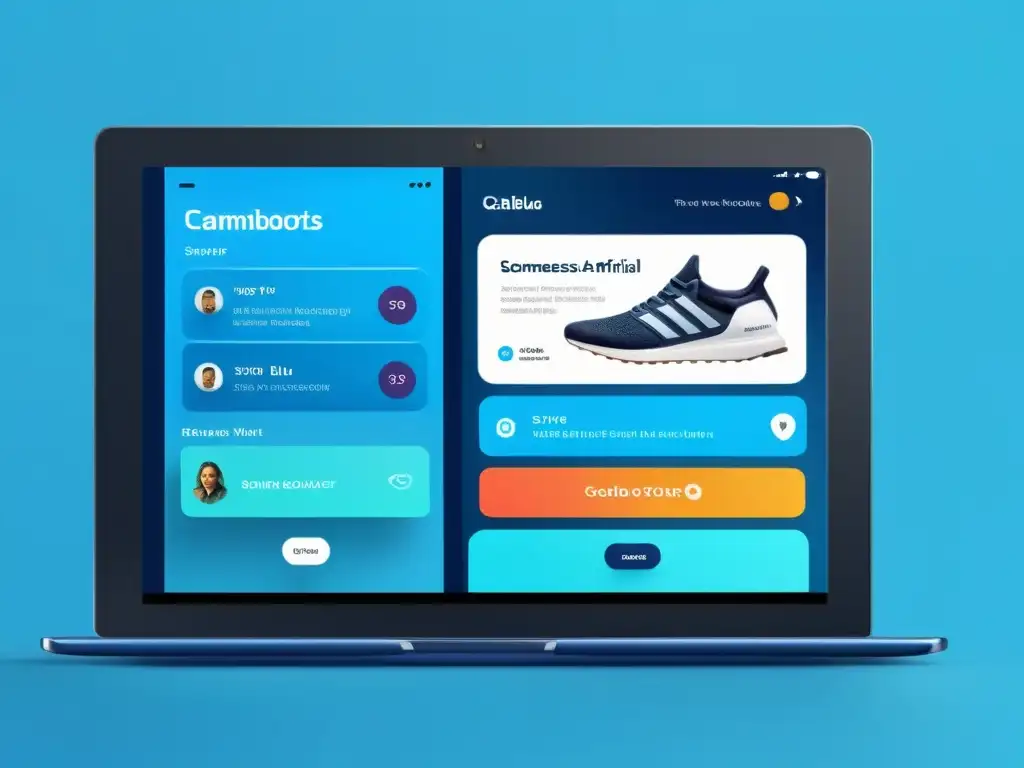
Privacy should also be part of voice UX design. If the assistant uses purchase history, addresses, preferences, or payment information, the experience should avoid creating a feeling of loss of control. Automation is useful when it saves effort, but it needs clear boundaries so that the consumer knows what is happening.
Designing Conversations That Know How to Handle Errors
No voice recognition system works perfectly in all situations. It may incorrectly interpret an amount, confuse a product name, or fail to distinguish between two variants. Therefore, error recovery must be part of the voice UX strategy from the beginning and not be considered a secondary function.
If the user says, “I want fifteen units” and the system understands “fifty,” it can respond: “I understood that you want 50 units. Is that correct?” If the consumer corrects the information, the conversation should continue from that point without forcing them to start over. Alexa’s design guidelines also recommend avoiding generic error messages and providing instructions that help the user continue within the voice UX. The same logic applies to ambiguous responses. If the user says, “I want the blue one” and there are three blue products, the assistant should ask for a specific clarification rather than selecting arbitrarily. A good voice UX experience does not try to hide its limitations, but rather turns them into opportunities to request the missing information.
Integration Between Voice, Web, and Mobile
The omnichannel strategy is fundamental for voice UX to provide real value. Some tasks are more convenient through conversation, such as checking an order, quickly searching for a product, or modifying a cart, while others work better in a visual interface. Comparing photographs, specifications, and numerous variants can be impractical if all the information is presented exclusively through audio.
For this reason, a voice UX experience should allow the user to switch channels while preserving the context. A consumer can say, “search for 55-inch televisions for less than 800 euros,” receive three alternatives, and continue the comparison on their phone. They could then return to the conversation and say, “add the second one to the cart,” without having to repeat the entire search. This continuity turns voice UX into an additional layer of interaction rather than an isolated channel. The future of conversational commerce will probably be multimodal, combining voice, applications, websites, and other touchpoints according to the task the user wants to perform.
Data Architecture for an Effective Voice Experience
The quality of the experience depends directly on the quality of the available commercial data. Products need structured and up-to-date information about price, availability, variants, dimensions, features, compatibility, shipping, and returns. Google already has specific conversational attributes in Merchant Center to help artificial intelligence systems and conversational agents better understand certain product nuances.
This demonstrates that voice UX for e-commerce is not only a design project. It requires coordination among UX, content, catalog, technology, data, e-commerce, and customer service. An assistant may perfectly understand the consumer’s question, but it will provide a poor experience if it cannot access up-to-date inventory or if the product data is incomplete. It is also necessary to maintain the context of the conversation. If the user has already indicated their budget, size, color, or purpose, the system should not ask for that information again on every turn. Maintaining context reduces repetition and makes voice UX feel more natural.
Metrics for Measuring Voice UX in E-commerce
Evaluating a voice UX strategy in e-commerce should combine commercial and conversational metrics. Conversion is important, but it does not by itself explain whether the user has had a simple experience. Task completion rate, number of turns, recognition errors, corrections, drop-offs, and transfers to other channels should also be analyzed.
These metrics should be interpreted together. A reduction in the number of turns may seem positive, but a conversation that is too short could indicate that the system is making decisions without sufficient confirmation. The truly relevant metric is the effort required to correctly complete the task. It is also useful to compare the results of voice UX with those of other channels. If conversational search manages to increase task completion or reduce the time needed to find a product, there is a clear signal of value. Metrics should be used to identify friction points and progressively improve the flows.
Research and Testing Before Launch
User testing is essential because people do not speak the way designers imagine. A team may create an intent called “search for product,” while the consumer may say, “I need something to clean the sofa because my dog has stained it.” Both expressions represent a similar need, even though they use completely different words in a voice UX interaction.
Voice UX testing should include real purchasing situations, such as searching for products, asking for a cheaper alternative, comparing options, changing a variant, adding an item to the cart, checking an order, or canceling a purchase. It should also take interruptions, unexpected responses, and ambiguous expressions into account. Usability research makes it possible to discover these problems before they reach a large-scale implementation. The goal is not to demonstrate that the system works in ideal scenarios, but to check how it responds to the diversity of human language. The more realistic the research, the more likely the voice UX is to work correctly under real-world conditions.
Phased Implementation Strategy
A company does not need to automate the entire purchasing process from day one. A progressive voice UX strategy can begin with low-risk queries, such as price, availability, features, and order tracking. Conversational search, recommendations, and simple cart actions can then be incorporated.
In a second stage, the assistant can manage tasks such as “add it to the cart,” “remove the last product,” or “find a cheaper alternative.” When the system demonstrates sufficient accuracy and users trust it, checkout through voice UX can be incorporated with appropriate confirmation mechanisms. This approach makes it possible to learn from real-world data before expanding automation. It is also important to decide which actions should remain under supervision. Not all purchases have the same level of risk or require the same level of intervention. The best strategy uses voice UX where it genuinely reduces effort while keeping other channels available when they provide greater clarity.

Voice UX in e-commerce represents an evolution of digital commerce toward experiences based not only on screens, but also on natural language, context, and intent. Its potential goes far beyond allowing a user to dictate a search, because a voice UX experience can help discover products, compare alternatives, resolve questions, manage a cart, and accompany the purchasing process. To achieve this, companies must design specific conversations and not limit themselves to transferring a visual interface to the voice channel.
The most effective flows will be those that reduce cognitive load, use progressive information, and ask only the necessary questions. They will also need to incorporate error recovery, confirmations for sensitive actions, and transparency regarding prices, orders, and personal data. Trust will be especially important because the consumer needs to feel that they remain in control during an interaction that they cannot observe visually in the same way as a web page. Therefore, a well-designed voice UX should prioritize clarity, context, and control.
Voice should also not be considered an absolute substitute for websites or mobile applications. Its true potential appears when it forms part of a multimodal experience that allows a task to be started through voice UX, continued visually, and then returned to through conversation without losing the context. In this scenario, the voice UX strategy for e-commerce ceases to be a simple technological innovation and becomes a tool for reducing friction, improving conversion, and building more natural shopping experiences.
The ultimate goal is not simply to get the consumer to “talk to a store,” but to allow them to express what they need and receive a useful, accurate, and secure response with as little effort as possible. As intelligent assistants and conversational interfaces become integrated into e-commerce, brands will have to think not only about how a store looks, but also about how it listens, interprets, and responds. Those that design these conversations around real user needs will be able to turn voice UX into a competitive advantage within the new conversational commerce ecosystem.
If your company wants to develop a voice UX, e-commerce, or more effective digital experience strategy, you can count on the services of MoodWebs and aescribir. To learn more about our solutions or request information, write to us at [email protected].
 EN
EN  ES
ES