
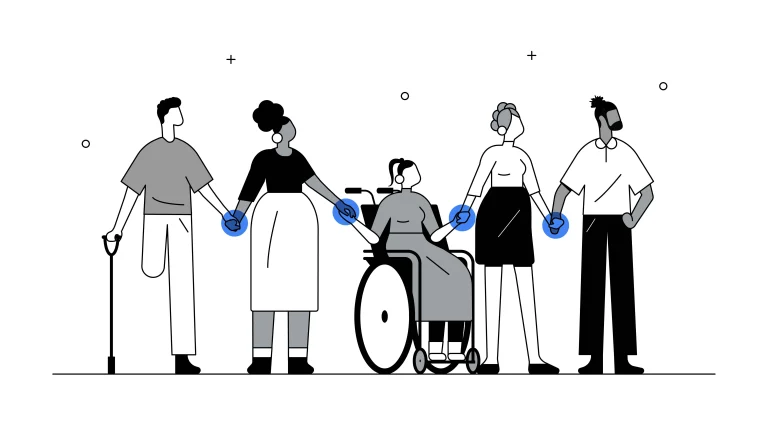
Today’s audiences are increasingly diverse and demanding. Consumers not only seek quality products or services, but also expect brands to recognize, respect, and represent them in all their diversity. In this context, inclusive marketing has become a key strategy for companies that want to authentically connect with their audiences, build loyalty, and stand out in competitive markets.
This article from MoodWebs explores what inclusive marketing is, why it is essential for any business, its fundamental principles, current trends, and how to apply it in practical ways, including specific examples for sectors like hospitality.
What is Inclusive Marketing?
Inclusive marketing is a strategy that seeks to connect with diverse audiences by recognizing and celebrating differences in gender, ethnicity, sexual orientation, age, physical abilities, culture, and other characteristics. Inclusive marketing is not just about avoiding stereotypes or clichés; it is about creating messages and campaigns that authentically reflect people’s realities, making them feel valued and represented.
For example, instead of showing only traditional families in an advertising campaign, inclusive marketing would also feature single-parent families, same-sex families, or multigenerational families. In this way, the brand not only expands its reach but also improves its public perception thanks to inclusive marketing.
According to a Google study, 64% of consumers take some action after seeing ads they consider inclusive, showing that this strategy not only has a positive social impact but is also a powerful business tool.

Why are Diversity and Inclusion Important in Marketing?
- They reflect audience reality: Today’s audiences are heterogeneous and complex. Ignoring this diversity means missing the opportunity to connect with large segments of consumers. Brands that integrate diversity into their messaging generate more trust and empathy through inclusive marketing.
- They foster customer loyalty: A report by Accenture reveals that 41% of shoppers have stopped supporting brands that do not reflect their values around inclusion. In contrast, companies that demonstrate commitment to diversity build stronger, longer-lasting relationships with their customers.
- They drive innovation: Including diverse perspectives in the design and execution of inclusive marketing campaigns fosters creativity, allowing for the development of original and effective ideas. Inclusion is a constant source of innovation.
- Positive social impact: Inclusive marketing can challenge stereotypes and contribute to building a more equitable and respectful society. Brands hold cultural power and should use it responsibly.
Core Principles of Inclusive Marketing
For inclusive marketing to be authentic and effective, it must be based on clear principles that permeate all company actions, not just advertising. The main principles of inclusive marketing are:
1. Authenticity and Genuine Commitment
Inclusive marketing must stem from a genuine and deep commitment from brands. It should not be seen as a trend or opportunistic tactic to gain visibility or sympathy on social media. Inclusion is not a fad; it is a responsibility that must be rooted in the very essence of the organization.
Authenticity in inclusive marketing means that the company not only communicates inclusive values outwardly, but also practices them internally. This is reflected in the organizational culture, the diversity of work teams, hiring policies, talent management, and leadership decision-making. If inclusion is not part of the company’s DNA, any marketing effort will be perceived as hollow or superficial.
Brands that manage to build a solid reputation in inclusion are those that act consistently at all levels, from advertising campaigns to internal processes. Authenticity in inclusive marketing not only builds trust but also strengthens the emotional bond with consumers, who increasingly seek brands with real purpose and values.
2. Diverse and Real Representation
One of the most visible pillars of inclusive marketing is representation. Inclusive marketing campaigns should reflect the complexity and richness of society, showcasing people of different races, cultures, genders, sexual orientations, ages, physical abilities, and social backgrounds. It’s not just about including diverse faces in an image or video but about representing those identities honestly and meaningfully.
Today’s audiences value authenticity and are increasingly critical of content that reinforces stereotypes or relies on superficial portrayals. To achieve real representation, it is essential that the stories told in campaigns are consistent with the experiences of the people represented. This means including narratives that show their challenges, triumphs, relationships, professions, hobbies, and lifestyles without reducing them to a single dimension.
Diverse representation in inclusive marketing must also extend to leading roles, avoiding relegating diverse people to secondary or symbolic parts. When people see themselves reflected in a brand’s communication, they feel recognized, which generates empathy, trust, and emotional affinity. In turn, this broadens the brand’s reach and positions it as an ally of equity and respect for differences.
3. Inclusive and Respectful Language
The language a brand uses is a powerful tool that can bring people closer or push them away, include or exclude. In the context of inclusive marketing, language use must be careful, respectful, and intentional. Brands should avoid terms or expressions that perpetuate stereotypes, generalizations, or assumptions about their audience’s identity, gender, or sexual orientation.
Inclusive language aims to speak to all people without leaving anyone out. This means avoiding, for example, phrases that assume all customers are men or women, or that all families have a traditional structure. Instead, neutral or collective terms that encompass a diversity of identities can be used.
Moreover, the tone of inclusive marketing messages should be empathetic and respectful, without falling into condescension or cultural appropriation. For a marketing campaign to be truly inclusive, every word must align with respect for people and their many ways of being. Correct language not only conveys professionalism and responsibility but also contributes to creating a more fair and conscious communication environment.
4. Accessibility for All
Inclusion also means ensuring that messages reach everyone, regardless of their physical, sensory, or cognitive abilities. Accessibility must be a structural component of marketing, not an optional add-on. This means that all inclusive marketing content produced by a brand—whether on its website, social media, print materials, mobile apps, or audiovisual campaigns—must be accessible to people with disabilities.
For example, videos should include subtitles for people with hearing impairments, images should have text descriptions for people with visual impairments, and websites should be designed to be navigable using screen readers. It is also important to consider aspects like color contrast, font size, and intuitive navigation for users with cognitive or motor challenges.
Ignoring these aspects not only limits a brand’s reach but also excludes a significant portion of the population. By investing in accessibility, companies show that they value all people equally and are willing to break down barriers to build truly universal communication. Additionally, offering an accessible experience improves brand perception and strengthens relationships with customers who feel seen and considered.
5. Active Listening and Community Participation
Inclusion is not only about speaking, but also about listening. For a brand to be truly inclusive, it must create spaces for dialogue and learning with the communities it aims to represent. Active listening means being willing to receive feedback, question assumptions, and correct mistakes when necessary. This mindset in inclusive marketing should be present from the research and planning stages of a campaign and continue throughout and after its implementation.
Involving representatives of diverse communities in the creative process—whether as collaborators, advisors, or protagonists—ensures that campaigns are more authentic, accurate, and empathetic. It also uncovers nuances and needs that might otherwise go unnoticed. This active participation strengthens the relationship with the audience, giving them a voice, making them feel part of the process, and reinforcing their sense of belonging.
Additionally, active listening in inclusive marketing prevents common mistakes such as cultural appropriation, invisibilization, or caricaturing certain identities. Brands that listen and learn from their communities not only communicate better, but also build long-term trust. In an increasingly diverse environment, this principle becomes a key differentiator for standing out ethically and sustainably.

Current Trends in Inclusive Marketing
Inclusive marketing is constantly evolving. Here are some inclusive marketing trends that are setting the tone, along with concrete examples:
Inclusion of People with Disabilities in Advertising
Brands are increasingly showcasing how their products and services improve the quality of life for people with disabilities, making their participation in society visible through inclusive marketing. Example: Nike launched the “Nike Air Zoom Disability” campaign, featuring sneakers designed for people with reduced mobility. They also highlight athletes with disabilities in their ads, promoting visibility and breaking stereotypes.
Diverse Representation in Media and Advertising
Campaigns feature people of different races, ages, genders, sexual orientations, and family structures, reflecting a broader and more genuine reality through inclusive marketing. Example: Dove’s “Real Beauty Sketches” campaign portrayed women of various ages, races, and body types, sending a message of acceptance and authentic beauty.
Inclusive Marketing in Fashion and Beauty
Brands are adapting their products and advertising so that all people—regardless of shape, size, or color—feel represented, thus building their inclusive marketing perspective. Example: Rihanna’s Fenty Beauty revolutionized the industry with a wide range of shades for darker skin tones, promoting racial inclusion and beauty diversity.
How to Create an Inclusive Marketing Strategy?: Step by Step
Implementing inclusive marketing is a long-term commitment. Here's a practical guide from MoodWebs:
1. Research Your Audience and Understand Their Needs
Use demographic data, surveys, interviews, and focus groups to deeply understand the characteristics, values, and expectations of your audience. Listening directly is key to inclusive marketing.
2. Diversify Your Creative Team
A diverse team brings multiple perspectives that enrich inclusive marketing campaigns and help avoid stereotypes. Include people of different backgrounds, ages, genders, abilities, and experiences.
3. Audit Your Current Content
Review all your content to identify bias, stereotypes, or lack of representation. Correct these issues so your message is fair and balanced, helping you stand out with inclusive marketing.
4. Create Accessible Content for Everyone
Ensure your materials are understandable and accessible to people with disabilities, using subtitles, descriptions, and adapted formats—in line with inclusive marketing practices.
5. Measure Impact and Adjust
Evaluate metrics such as engagement, brand perception, and feedback to understand how audiences react to your inclusive marketing campaigns. Adjust strategies based on the results.
6. Train Your Team in Diversity and Inclusion
Provide training to raise awareness and prepare everyone in the company—from executives to customer service—on the importance and application of inclusion through inclusive marketing strategies.
How to Apply Inclusive Marketing Without Falling into Clichés?
1. Listen First
Beyond demographic data, seek real stories and empathy. Don’t use diversity just to check boxes; use it to connect authentically through inclusive marketing. Example: Instead of selecting models only to meet diversity quotas, work with collaborators who genuinely represent those communities.
2. Real Representation
Avoid stereotypes and show authentic experiences that connect emotionally. Campaigns like Dove’s “Real Beauty” are good examples of inclusive marketing with real representation—this is what truly connects with your audience.
3. Create Inclusive Experiences
Include accessibility in the design of products, services, and touchpoints. Example: Nike created FlyEase, sneakers designed for people with reduced mobility.
4. Collaborate with Communities
Involve leaders and members of represented groups to ensure that messages reflect their real values and needs with inclusive marketing. Example: Starbucks worked with the Deaf community to create stores adapted to sign language.
5. Continuously Evaluate and Improve
Inclusive marketing is an ongoing process. Review and adapt your strategies, stay open to feedback, and don’t let it be just a one-time project.
Common Mistakes to Avoid
- Tokenism: Using diversity only as an accessory without real commitment can damage credibility.
- Stereotypes: Superficially portraying communities is worse than not representing them at all.
- Ignoring Intersectionality: People have multiple, complex identities—they shouldn’t be reduced to a single label.

Inclusive marketing is much more than a trend or just another strategy. Inclusive marketing is a way to understand and value people in their diversity, creating authentic and lasting connections with increasingly heterogeneous audiences. Incorporating inclusion into the heart of campaigns and business practices not only drives commercial results but also helps build a fairer and more equitable society.
If you haven’t started implementing these inclusive marketing practices yet, now is the time. Remember that inclusion is a long-term commitment that requires research, authenticity, diversity, accessibility, and constant adaptation. If you want to start planning your inclusive marketing campaigns and don’t know where to begin, write to us at [email protected]. We have a team of experts ready to guide you in implementing this type of marketing that will help you stand out.
 EN
 ES