
The growth in the use of mobile devices has transformed the way companies interact with their users. Smartphones are used daily to purchase, consult information, consume content, and access different digital services. In this context, attracting visitors is no longer enough, because companies also need to ensure that these users return frequently. For this reason, retention has become a fundamental objective of digital strategies.
Native applications have traditionally been one of the main tools for achieving this permanence. These applications are developed specifically for systems such as Android or iOS and can take advantage of numerous device functions. Among their advantages are notifications, local storage, integration with the operating system, and the presence of an icon on the home screen. However, they require the user to perform a download and installation before being able to use them fully, which can represent a barrier for those who are not yet familiar with the service.
Progressive Web Apps, known as PWA or progressive web applications, offer an alternative that combines web technologies with features specific to mobile applications. They are developed using technologies such as HTML, CSS, and JavaScript, and can use elements such as service workers, caching, installation, and notifications. The user can start using them from a browser without the need to download an application. Subsequently, if they find value in the service, they can install it and access it in a more direct way.
How Progressive Web Apps Work
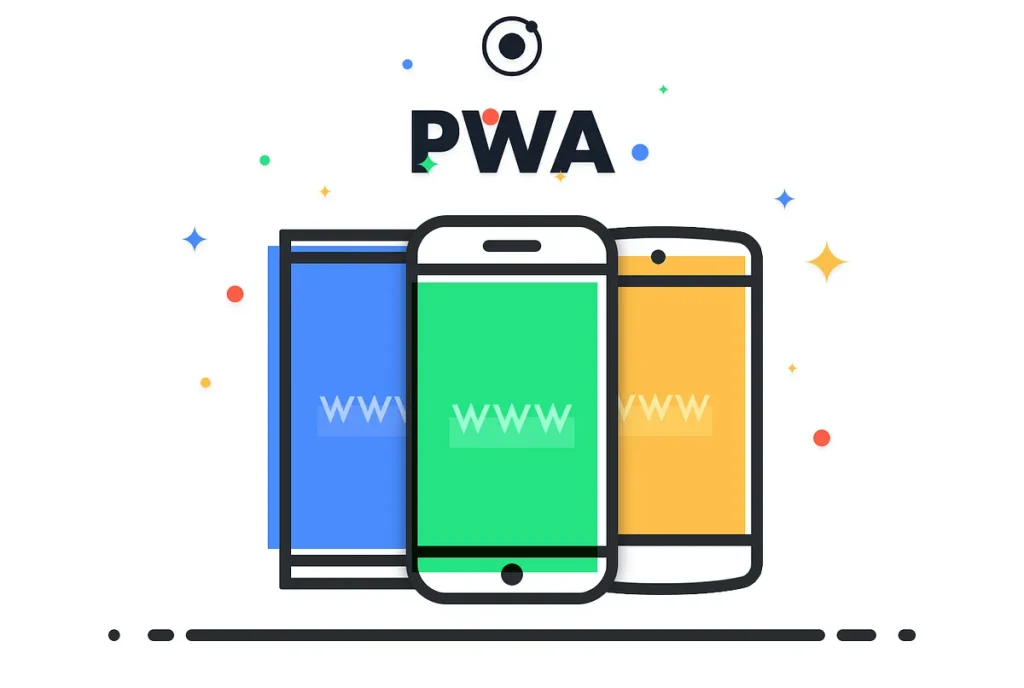
A Progressive Web App (PWA) is a web application designed to provide an experience similar to that of an installed application. The concept of a Progressive Web App allows a web application to incorporate features specific to mobile applications while continuing to function from a browser. The web manifest of a Progressive Web App allows aspects such as the name, icons, and certain visual elements of the application to be defined. In addition, the service workers of a Progressive Web App allow resources to be managed, certain requests to be controlled, and caching strategies to be used. These technologies make it possible for a traditional web page to evolve toward an experience closer to that of an installed Progressive Web App.
The installation of a Progressive Web App is especially important from a retention perspective. On compatible devices and browsers, a Progressive Web App can be added to the home screen and opened as an independent application. This makes it easier for the user to return to the service without having to enter an address again or perform a search. The Progressive Web App icon also keeps the brand visible and may help the user remember the platform. In this way, a Progressive Web App can facilitate recurrent access and contribute to maintaining the relationship between the user and the service.
Another fundamental characteristic of a Progressive Web App is progressiveness. A Progressive Web App should work even when certain advanced features are not available on a particular device. The possibilities of a Progressive Web App may vary between browsers and operating systems, so developers must design a basic functional experience and add features when they are compatible. This approach allows a Progressive Web App to expand its reach without depending completely on the capabilities of a single platform.
Progressive Web App as a Retention Strategy
Retention refers to the ability to ensure that users continue using a product after their first interaction. For a company, a recurring user can generate new purchases, consume more content, or use a service again. In this context, a Progressive Web App can contribute to maintaining a more frequent relationship between the user and the platform. In addition, retaining an existing user is usually strategically different from constantly acquiring new visitors. Therefore, any technology that facilitates returning, such as a Progressive Web App, can contribute to improving the performance of a digital business.
Native applications have an important advantage once installed because they remain present on the device. The problem appears before installation, since some users may consider it unnecessary to download an application for a one-time action. A Progressive Web App initially eliminates this obstacle because it allows access to the service through a web address. The user can try the platform and learn about the advantages of a Progressive Web App before deciding whether they want to install it.
This process modifies the traditional user journey. First, the person discovers the service through a search engine, a social network, an advertising campaign, or a link. Then, they can use the Progressive Web App without installing anything and check whether it actually meets their needs. Finally, if the experience is positive, they can add the PWA to the home screen to facilitate future visits. Installation thus ceases to be a condition for discovering the product and becomes a consequence of the perceived value of the Progressive Web App.
Installation and Loyalty
The installation of a Progressive Web App can function as a loyalty mechanism because it reduces the steps required to return to a service. Once installed, the Progressive Web App can be found alongside the conventional applications on the phone. This is especially useful for platforms that depend on frequent visits, such as online stores, social networks, digital media, and information services. The ease of access provided by a PWA can become an incentive to use the platform again.
Rakuten 24, a Japanese e-commerce platform, offers a particularly significant real-world case related to Progressive Web Apps. The company sought to improve mobile customer retention and chose to progressively incorporate PWA features, beginning with the possibility of installation. According to the results published by the company, users who installed the Progressive Web App recorded a 450% increase in the visitor retention rate over a one-month period compared with the previous mobile web flow. There was also a 310% increase in the frequency of visits per user, a 150% increase in sales per customer, and a 200% increase in the conversion rate.
These data should be interpreted with some caution because they correspond to users who decided to install the Progressive Web App. It is possible that those who agreed to install the PWA had a greater intention to use it from the beginning than those who did not. Therefore, the results do not allow us to state that all of the improvement was caused exclusively by the Progressive Web App. However, the case does demonstrate that the installation of a PWA may be related to a higher frequency of interaction and better business indicators.
Performance and User Experience
Performance is another essential element for mobile retention. Users expect pages to load quickly and actions to respond without significant delays. In this regard, a Progressive Web App must provide a smooth experience to prevent the user from abandoning the platform. A slow experience can cause abandonment even when the product offers useful features. Therefore, a strategy based on Progressive Web Apps should consider performance as a priority and not merely as a secondary technical feature.
Service workers allow a Progressive Web App to store certain resources and reuse them later. This can reduce the amount of information that needs to be downloaded on each visit and facilitate shorter loading times. PWA-specific strategies can also be used to provide certain content when the connection is slow or temporarily interrupted. However, a Progressive Web App is not automatically fast, since its performance also depends on programming, images, servers, and the overall design.
Twitter Lite is one of the best-known cases of a Progressive Web App. The company developed this PWA with the objective of achieving a faster, more reliable, and more data-efficient mobile experience. According to the results published by Twitter, the Progressive Web App achieved a 65% increase in pages viewed per session and a 75% increase in tweets sent, in addition to a 20% reduction in the bounce rate. The company also stated that Twitter Lite required less than 3% of the storage used by Twitter for Android.
These results show that the performance of a Progressive Web App can directly influence user behavior. A PWA that uses little storage can be attractive to people with devices with limited space. A fast experience can also make it easier for users to spend more time on the Progressive Web App and perform more actions. Therefore, the technical optimization of a PWA can become an indirect element of retention.
Limited Connectivity and Offline Functionality
One of the most interesting possibilities of Progressive Web Apps is their ability to maintain certain functions when the connection is poor. Resources stored through service workers can be used later without having to download them again in a PWA. This makes it possible to create experiences that are partially available without a connection, although the specific functions depend on the architecture of each Progressive Web App. This does not mean that all PWAs can function completely without the Internet.
This feature can be especially useful on mobile devices because connectivity can change while traveling. An educational Progressive Web App can retain previously viewed content, while a news PWA can display stored articles. A productivity tool based on a Progressive Web App can also save certain information until the connection is restored. These possibilities make it possible to reduce the impact of network problems on the experience.
From a retention perspective, a Progressive Web App that maintains certain functions during an interruption can convey a greater sense of reliability. If every connection problem forces the user to completely abandon the platform, the risk of frustration increases. A partially functional experience can prevent this abandonment and make it easier for the user to continue using the PWA. Therefore, the resilience of a Progressive Web App can indirectly contribute to loyalty.
Notifications and Reactivation
Notifications constitute another important mechanism for encouraging users to return to a Progressive Web App. In compatible environments, PWAs can use push notifications to send messages even when the application is not open in the foreground. Companies can use this feature of a Progressive Web App to provide information about orders, news, reminders, or activities related to the service. In this way, the platform can re-establish contact with a user who has not returned on their own initiative.
Twitter Lite used web notifications and installation on the home screen as reactivation mechanisms for its Progressive Web App. The company reported that approximately 250,000 unique daily users started Twitter Lite from the home screen icon and that they did so an average of four times a day. These data show that a PWA can become a regular access channel after the first interaction. The installation of the Progressive Web App, therefore, can facilitate a more frequent relationship without relying exclusively on a native application.
However, notifications from a Progressive Web App should be used in moderation. Excessive or irrelevant messages can cause the user to disable them and produce the opposite effect to the one intended. An appropriate PWA strategy should prioritize usefulness, personalization, and the appropriate timing of each communication. The objective should be to provide value through the Progressive Web App and not simply increase the number of notifications.
PWA Compared to Native Applications
Native applications maintain important advantages. Since they are developed specifically for an operating system, they can deeply take advantage of certain device functions. They may also be more appropriate when a product requires advanced integration with hardware, specific graphics capabilities, or particular system functions. In addition, application stores provide an established distribution channel for native applications.
Progressive Web Apps stand out mainly for their accessibility and ease of distribution. A Progressive Web App allows the user to start using the service from a browser without previously downloading an application. They can also access it through links and find a PWA through search engines, social networks, or digital campaigns. This allows the company to reduce entry barriers and request installation of the Progressive Web App only after demonstrating the value of the service.
From a business point of view, Progressive Web Apps can also reduce part of the complexity associated with developing different native applications. A company that maintains specific versions for several operating systems needs to carry out independent updates and tests. A PWA allows the use of a common web technology base, although a Progressive Web App also requires compatibility testing across different browsers and devices. Therefore, PWAs do not eliminate all costs, but they can represent an efficient alternative for certain projects.
The Case of AliExpress
AliExpress constitutes another relevant case of the use of a Progressive Web App in e-commerce. The company sought to combine the reach of the mobile web with an experience more similar to that of an application. This was important because the mobile web constituted a fundamental channel for discovering its products and the PWA made it possible to improve that experience. The Progressive Web App strategy allowed new users to begin interacting with the service without installing a native application.
The results published by the company showed significant improvements. AliExpress recorded a 104% increase in the conversion rate of new users across different browsers and an 82% increase in conversion on iOS. It also managed to double the pages visited per session and increase the time spent per session by 74% through this Progressive Web App strategy. These results indicate that a mobile experience optimized through a PWA can influence both interaction and conversion.
The case demonstrates that a Progressive Web App strategy should not be evaluated solely by the number of installations. A faster and more accessible PWA can generate longer sessions and a greater number of actions. In e-commerce, this can translate into more opportunities to complete a purchase and improve the relationship with the customer. Therefore, Progressive Web Apps can influence different stages of the customer journey.
Progressive Web Apps represent a relevant alternative for improving the retention of mobile users. A Progressive Web App allows a person to discover and use a service without previously installing an application, combining the advantages of a web application with certain characteristics of mobile applications. Subsequently, the installation of a PWA, access from the home screen, local storage, offline functions, and notifications can encourage new interactions. In this way, Progressive Web Apps reduce friction and allow a more frequent relationship between the user and the service to be progressively built.
The cases of Rakuten 24, Twitter Lite, and AliExpress show that a strategy based on Progressive Web Apps can produce significant results. Rakuten 24 recorded notable increases in retention, visit frequency, sales per customer, and conversion among users who installed its PWA. Twitter Lite achieved improvements in pages viewed, tweets sent, and bounce rate, in addition to using much less storage than its Android application through its Progressive Web App strategy. AliExpress, for its part, recorded significant increases in conversion, pages viewed, and session time after implementing this technology. These cases show the potential of PWAs to improve different aspects of the experience and encourage a more consistent relationship with users.
Progressive Web Apps should not be understood as a universal substitute for native applications. Native applications continue to be especially useful when deep integration with hardware or with certain operating system functions is required. However, a Progressive Web App offers clear advantages in accessibility, distribution, and reducing the initial installation barrier. The choice between a PWA and a native application will depend on the needs of the product, the characteristics of the audience, and the available resources.
Ultimately, the main value of Progressive Web Apps as a retention strategy lies in combining the reach of the web with some features traditionally associated with applications. The user can first learn about the service, check its usefulness, and then decide whether they want to install the PWA. This process allows installation to be a consequence of the value offered and not a prerequisite for accessing the product. In a highly competitive mobile environment, reducing the obstacles to using a service again through a Progressive Web App can become an important advantage for companies.
For companies that wish to implement a Progressive Web App, improve their digital presence, or develop solutions adapted to the new needs of the mobile environment, MoodWebs offers specialized development and web solution services. A well-planned Progressive Web App strategy can help improve the user experience, facilitate recurrent access, and strengthen a company's digital presence. If you wish to learn about the services available from MoodWebs and analyze how a PWA can be adapted to the needs of your business, you can write to [email protected] to request more information and receive advice.
 EN
EN  ES
ES