
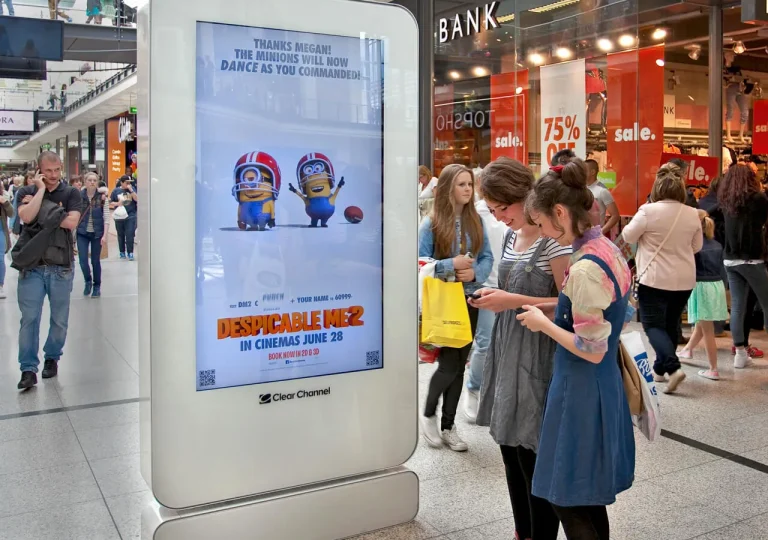
Outdoor advertising has been for decades one of the most influential media for connecting brands with audiences in urban environments. From billboards on main avenues to ads in public transportation stations, Out-of-Home (OOH) has offered constant visibility that is difficult to ignore. However, its evolution has been marked by technological changes that have redefined its reach, its precision, and its measurement capacity. In this context, Programmatic Digital Out-of-Home (pDOOH) emerges as an innovation that integrates automation and the use of data into a traditionally static medium.
Programmatic Digital Out-of-Home not only represents a technological advancement, but also a conceptual shift in the way brands understand outdoor advertising. Instead of buying physical spaces for long periods, advertisers can now acquire specific impressions based on dynamic variables. This allows for greater efficiency in investment and more relevant communication for audiences. The combination of data, algorithms, and digital screens transforms the advertising experience into something adaptable, contextual, and measurable.
As cities become more digital and connected, the role of Programmatic Digital Out-of-Home strengthens as a key channel within omnichannel strategies. Its ability to integrate with other digital media allows brands to build coherent and consistent narratives across multiple touchpoints. This article explores in depth what Programmatic Digital Out-of-Home is, how it works, its advantages, challenges, and the impact it is having on the global advertising industry.
Evolution from OOH to Programmatic Digital Out-of-Home
The evolution of outdoor media has been progressive but significant, moving from completely analog formats to highly sophisticated data-driven systems, culminating in Programmatic Digital Out-of-Home (pDOOH) as a key turning point in this transformation. In its most traditional form, OOH consisted of the direct purchase of physical advertising spaces for a determined period, a model that clearly precedes Programmatic Digital Out-of-Home (pDOOH).

This model offered broad reach but presented important limitations in terms of segmentation and flexibility, aspects that Programmatic Digital Out-of-Home (pDOOH) specifically addresses. Once the ad was installed, it could not be modified without incurring additional costs, which contrasts with the agility that Programmatic Digital Out-of-Home (pDOOH) enables today.
With the arrival of Digital Out-of-Home (DOOH), the medium took a leap toward digitalization, preparing the ground for the later development of Programmatic Digital Out-of-Home (pDOOH). This advancement introduced electronic screens capable of displaying multiple ads in rotation, something essential for the functioning of Programmatic Digital Out-of-Home (pDOOH).
Thanks to this innovation, advertisers were able to update content more quickly and adapt messages with greater speed, getting closer to what we now understand as Programmatic Digital Out-of-Home (pDOOH). However, the purchase of these spaces was still largely manual, which limited the full use of the format’s digital capabilities and highlighted the need to evolve toward Programmatic Digital Out-of-Home (pDOOH).
Programmatic Digital Out-of-Home (pDOOH) represents the culmination of this evolution by incorporating programmatic technology into the purchase of outdoor media, consolidating the role of Programmatic Digital Out-of-Home (pDOOH) as an advanced solution. This model allows the automation of advertising space acquisition using technological platforms that operate in real time, one of the main characteristics of Programmatic Digital Out-of-Home (pDOOH).
In this way, Programmatic Digital Out-of-Home (pDOOH) makes it possible to move from a logic based on locations to one centered on audiences, where each impression is decided based on contextual and behavioral data thanks to Programmatic Digital Out-of-Home (pDOOH). This change not only improves efficiency, but also opens new creative and strategic possibilities, reaffirming the importance of Programmatic Digital Out-of-Home (pDOOH) in the current advertising ecosystem.
What is Programmatic Digital Out-of-Home?
Programmatic Digital Out-of-Home (pDOOH) is a form of advertising buying that uses automated technology to acquire spaces on digital screens located in public environments, consolidating Programmatic Digital Out-of-Home (pDOOH) as a key evolution of the outdoor medium. Unlike traditional methods, where decisions are made in advance with little flexibility, Programmatic Digital Out-of-Home (pDOOH) allows campaigns to be adjusted in real time, which defines much of the value of Programmatic Digital Out-of-Home (pDOOH). This is achieved through the use of platforms that process large volumes of data to determine the best moment, place, and context to display an ad, a central capability of Programmatic Digital Out-of-Home (pDOOH).
This approach implies an integration between the physical and digital worlds, where screens act as intelligent touchpoints within the Programmatic Digital Out-of-Home (pDOOH) ecosystem. Advertisers can define specific parameters such as schedules, weather conditions, foot traffic, or demographic characteristics to optimize message delivery through Programmatic Digital Out-of-Home (pDOOH). This turns Programmatic Digital Out-of-Home (pDOOH) into a highly adaptable channel, capable of responding to changing situations in the urban environment thanks to Programmatic Digital Out-of-Home (pDOOH).
Additionally, Programmatic Digital Out-of-Home (pDOOH) maintains a fundamental characteristic of outdoor media: its capacity for collective impact, reinforcing the value of Programmatic Digital Out-of-Home (pDOOH). Unlike digital advertising on personal devices, where ads are directed at specific individuals, Programmatic Digital Out-of-Home (pDOOH) impacts multiple people simultaneously, a distinctive advantage of Programmatic Digital Out-of-Home (pDOOH). This combination of mass reach and contextual segmentation makes it a powerful tool for brand awareness and positioning campaigns within the Programmatic Digital Out-of-Home (pDOOH) environment.
How does pDOOH work?
The functioning of Programmatic Digital Out-of-Home (pDOOH) is based on a technological ecosystem that connects advertisers, agencies, and media owners through digital platforms, this structure being essential for Programmatic Digital Out-of-Home (pDOOH). These platforms allow campaigns to be managed in an automated way, from planning to execution and measurement within Programmatic Digital Out-of-Home (pDOOH). At the center of this system are demand-side and supply-side platforms, which facilitate the buying and selling of advertising spaces in real time, a characteristic process of Programmatic Digital Out-of-Home (pDOOH).
When an advertiser wants to launch a campaign, they use a platform to define their target audience, budget, and segmentation criteria within Programmatic Digital Out-of-Home (pDOOH). These criteria may include variables such as geographic location, time of day, or specific environmental conditions, all key elements in Programmatic Digital Out-of-Home (pDOOH). Once the campaign is configured, the system analyzes available opportunities and decides on which screens and at what moments to display the ads, optimizing each decision through Programmatic Digital Out-of-Home (pDOOH).
In many cases, this process is carried out through real-time auctions, where different advertisers compete for a specific impression within the Programmatic Digital Out-of-Home (pDOOH) environment. The system selects the best bid based on multiple factors, ensuring that each impression has maximum value thanks to Programmatic Digital Out-of-Home (pDOOH). This level of automation allows continuous campaign optimization, adjusting strategies based on results obtained within Programmatic Digital Out-of-Home (pDOOH).
Key characteristics of pDOOH
One of the most notable characteristics of Programmatic Digital Out-of-Home (pDOOH) is its ability to base buying on audiences rather than locations, which defines the approach of Programmatic Digital Out-of-Home (pDOOH). This means that advertising decisions are made based on who is present in a given place, rather than simply where the screen is located, a logic inherent to Programmatic Digital Out-of-Home (pDOOH). This approach allows for much more precise and relevant segmentation, aligning messages with audience characteristics through Programmatic Digital Out-of-Home (pDOOH).
One of the most notable characteristics of Programmatic Digital Out-of-Home (pDOOH) is its ability to base buying on audiences rather than locations, which defines the approach of Programmatic Digital Out-of-Home (pDOOH). This means that advertising decisions are made based on who is present in a given place, rather than simply where the screen is located, a logic inherent to Programmatic Digital Out-of-Home (pDOOH). This approach allows for much more precise and relevant segmentation, aligning messages with audience characteristics through Programmatic Digital Out-of-Home (pDOOH).

Creativity also plays a key role in Programmatic Digital Out-of-Home (pDOOH), since ads can be modified based on context within Programmatic Digital Out-of-Home (pDOOH). This allows for the development of more relevant and personalized messages, increasing the likelihood of capturing the audience’s attention through Programmatic Digital Out-of-Home (pDOOH). In addition, the ability to measure results with greater precision provides valuable information to optimize future campaigns within Programmatic Digital Out-of-Home (pDOOH).
Advantages of pDOOH
Programmatic Digital Out-of-Home (pDOOH) offers multiple advantages that position it as one of the most innovative solutions in the advertising field, consolidating Programmatic Digital Out-of-Home (pDOOH) as a current benchmark. One of the main advantages is investment efficiency, since Programmatic Digital Out-of-Home (pDOOH) allows ads to be displayed only when conditions are favorable to generate impact, thus optimizing the performance of Programmatic Digital Out-of-Home (pDOOH). This reduces wasted impressions and improves return on investment through the use of Programmatic Digital Out-of-Home (pDOOH).
Another important advantage is contextual segmentation capability, which allows messages to be adapted to specific situations through Programmatic Digital Out-of-Home (pDOOH). This not only increases ad relevance but also improves user experience by delivering content more aligned with their environment via Programmatic Digital Out-of-Home (pDOOH). The flexibility of the system allows real-time changes, which is especially useful in campaigns requiring rapid adaptation within Programmatic Digital Out-of-Home (pDOOH).
Programmatic Digital Out-of-Home (pDOOH) also stands out for its integration with other digital strategies, facilitating the creation of omnichannel campaigns supported by Programmatic Digital Out-of-Home (pDOOH). Brands can coordinate their messages across different platforms, generating a more coherent consumer experience thanks to Programmatic Digital Out-of-Home (pDOOH). Additionally, its non-intrusive nature makes it a well-accepted medium, as Programmatic Digital Out-of-Home (pDOOH) integrates naturally into the urban environment.
Data and segmentation in pDOOH
The use of data is the core of Programmatic Digital Out-of-Home (pDOOH), as Programmatic Digital Out-of-Home (pDOOH) allows informed decisions on when and where to display ads. These data can come from various sources, such as mobility information, demographic data, or weather conditions, all integrated within Programmatic Digital Out-of-Home (pDOOH). The integration of these variables enables the identification of patterns and behaviors that help optimize campaigns through Programmatic Digital Out-of-Home (pDOOH).
Segmentation in Programmatic Digital Out-of-Home (pDOOH) is not based on identifying specific individuals, but rather on analyzing the context and characteristics of audiences present in a given location thanks to Programmatic Digital Out-of-Home (pDOOH). This allows user privacy to be maintained while achieving high message relevance through Programmatic Digital Out-of-Home (pDOOH). The combination of data and technology facilitates the creation of more effective campaigns aligned with market needs through Programmatic Digital Out-of-Home (pDOOH).
Additionally, data analysis allows campaign impact to be measured more precisely within Programmatic Digital Out-of-Home (pDOOH), providing information on ad reach and effectiveness in Programmatic Digital Out-of-Home (pDOOH). This represents a significant advancement compared to traditional methods, where measurement was more limited in comparison with Programmatic Digital Out-of-Home (pDOOH).
Measurement and metrics
Measurement in Programmatic Digital Out-of-Home (pDOOH) has evolved significantly, allowing advertisers to evaluate campaign performance with greater precision thanks to Programmatic Digital Out-of-Home (pDOOH). Through various technologies, it is possible to estimate the number of people exposed to an ad, as well as its frequency of exposure within Programmatic Digital Out-of-Home (pDOOH). This provides a clearer view of campaign reach and effectiveness executed through Programmatic Digital Out-of-Home (pDOOH).
Additionally, indicators related to user behavior can be analyzed, such as traffic generated toward a point of sale, all measured through Programmatic Digital Out-of-Home (pDOOH). This allows a more direct connection between advertising exposure and business outcomes within Programmatic Digital Out-of-Home (pDOOH). The availability of real-time data facilitates continuous optimization of campaigns managed with Programmatic Digital Out-of-Home (pDOOH).
This level of measurement represents an important shift in outdoor media, bringing it closer to digital advertising standards thanks to Programmatic Digital Out-of-Home (pDOOH). The ability to analyze results and adjust strategies based on data allows maximizing the impact of each campaign within Programmatic Digital Out-of-Home (pDOOH).
The growth of pDOOH
The growth of Programmatic Digital Out-of-Home (pDOOH) has been driven by the digitalization of urban spaces and the advancement of programmatic technology, consolidating Programmatic Digital Out-of-Home (pDOOH) as a growing trend. More and more cities are incorporating digital screens in strategic locations, expanding opportunities for advertisers within Programmatic Digital Out-of-Home (pDOOH). This growth is also supported by increasing demand for more efficient and measurable advertising solutions, further reinforcing the adoption of Programmatic Digital Out-of-Home (pDOOH).
Brands are increasingly looking for channels that allow them to optimize investments and adapt to a changing environment, finding in Programmatic Digital Out-of-Home (pDOOH) an effective solution. In this context, Programmatic Digital Out-of-Home (pDOOH) positions itself as an attractive alternative that combines the best of physical and digital worlds, highlighting the strategic value of Programmatic Digital Out-of-Home (pDOOH). Its ability to integrate with other platforms makes it a key component of modern strategies based on Programmatic Digital Out-of-Home (pDOOH).
As technology continues to advance, Programmatic Digital Out-of-Home (pDOOH) is expected to keep expanding and evolving, strengthening its role in the industry. This will open new opportunities for innovation in the advertising field thanks to the development of Programmatic Digital Out-of-Home (pDOOH).
Challenges of pDOOH
Despite its many benefits, Programmatic Digital Out-of-Home (pDOOH) faces challenges that must be addressed to ensure its sustainable development within the Programmatic Digital Out-of-Home (pDOOH) ecosystem. One of the main challenges is inventory fragmentation, since not all screens are integrated into programmatic platforms, limiting the reach of Programmatic Digital Out-of-Home (pDOOH). This can make large-scale campaign planning and execution more difficult within Programmatic Digital Out-of-Home (pDOOH).
Another important challenge is the lack of standardization in metrics, which can generate inconsistencies in performance measurement within Programmatic Digital Out-of-Home (pDOOH). The industry is working on creating common standards to facilitate comparison and evaluation of campaigns within Programmatic Digital Out-of-Home (pDOOH). Additionally, technological complexity can represent a barrier for some brands that are not yet familiar with the Programmatic Digital Out-of-Home (pDOOH) model.
Transparency is also a key aspect, as advertisers seek assurance that their investments are managed efficiently and reliably within Programmatic Digital Out-of-Home (pDOOH). Overcoming these challenges will be essential to consolidate Programmatic Digital Out-of-Home (pDOOH) as a reference advertising channel in the future.

The future of Programmatic Digital Out-of-Home (pDOOH) is closely linked to technological advancement and the increasing digitalization of cities, positioning Programmatic Digital Out-of-Home (pDOOH) as a central axis in the evolution of the sector. The integration of artificial intelligence will improve decision-making and optimize campaigns more precisely within Programmatic Digital Out-of-Home (pDOOH), reinforcing its strategic value. This will enable the creation of more sophisticated strategies adapted to market needs thanks to Programmatic Digital Out-of-Home (pDOOH).
The expansion of digital inventory will also play an important role in the growth of Programmatic Digital Out-of-Home (pDOOH), as more public spaces incorporate connected screens within the Programmatic Digital Out-of-Home (pDOOH) ecosystem. This will increase opportunities for advertisers and enable broader coverage through Programmatic Digital Out-of-Home (pDOOH), strengthening its reach.
In this context, Programmatic Digital Out-of-Home (pDOOH) is consolidating itself as a key tool in the future of advertising, reaffirming its role in modern strategies. Its ability to combine reach, segmentation, and measurement makes it a highly relevant channel in an increasingly competitive and data-driven environment, once again highlighting the importance of Programmatic Digital Out-of-Home (pDOOH).
If you want to take full advantage of Programmatic Digital Out-of-Home (pDOOH) and elevate your advertising strategies to the next level, you can rely on the specialized services of MoodWebs, a company focused on innovative digital solutions. For more information or to start a tailored project, you can contact [email protected] and discover how to effectively integrate Programmatic Digital Out-of-Home (pDOOH) into your marketing strategy.
 EN
EN  ES
ES