
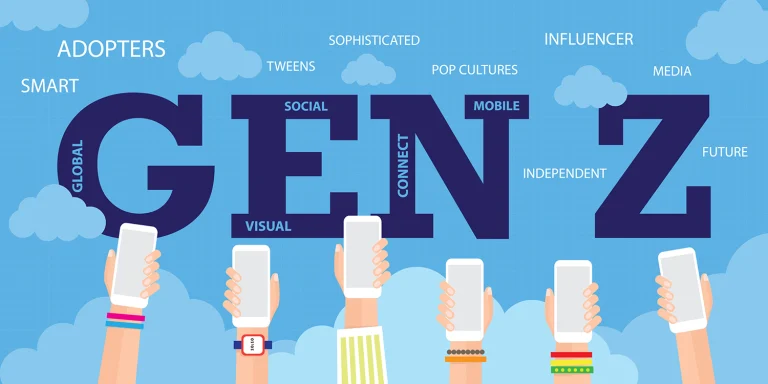
Generation Z — generally defined as those born between the mid-1990s and the early 2010s — has emerged over the past decade as a cultural and economic force of enormous impact. Influenced since birth by digital technology, this generation has redefined not only how they consume media and products, but also the way they connect with brands.
Moreover, their relationship with content and advertising has evolved significantly in recent years: after the rise of platforms such as TikTok, traditional marketing strategies have now entered a new stage that demands authenticity, cultural relevance, and meaningful experiences beyond a simple ad.
In this post-TikTok context, understanding which channels are emerging and why Gen Z rejects obvious advertising are critical issues for any brand that wants to connect deeply with this audience.
Gen Z: A Digital Native Generation with Unique Expectations
Unlike previous generations, Gen Z does not know a world without the internet or social media. For Gen Z, digital is not a complement, but the natural environment in which Gen Z lives, works, learns, and shops. This has enormous implications for marketing aimed at Gen Z, because every communication decision must resonate with the habits, preferences, and values of Gen Z.
Gen Z consumes content quickly and with fragmented attention, preferring short, visual, and dynamic formats — a trend driven by TikTok and continued through Instagram Reels and YouTube Shorts — which function as engines for product discovery and cultural trends for Gen Z.
Gen Z rejects polished and “artificial” messages. Gen Z prefers spontaneous content, without rigid scripts, generated both by real creators and by their own peers in digital communities, because Gen Z values sincerity and closeness in every interaction with brands.
For Gen Z, it is not enough for a product to be attractive: it must reflect values with which Gen Z identifies, such as inclusion, sustainability, or social justice. Gen Z also expects the brand that represents those values to act consistently, since Gen Z prioritizes authenticity and integrity over traditional advertising.

The Post-TikTok World: Which Channels Are Emerging?
Although many marketing strategies still revolve around TikTok due to its viral capacity and its penetration among Gen Z — with more than 1.2 billion users, around 70% of whom are Gen Z — this is not the only channel that matters to Gen Z.
In fact, the current landscape points to multiple emerging pathways where brands are finding deep connections with Gen Z, since Gen Z seeks authentic and meaningful experiences beyond traditional advertising.
1. Instagram and YouTube: Not Just Social Networks, but Hybrid Platforms
After TikTok, Instagram and YouTube remain central platforms for Gen Z, as Gen Z looks for spaces to consume content and discover trends dynamically. However, the function of these platforms goes beyond simple image or video feeds for Gen Z, because Gen Z values digital experiences that blend entertainment and utility.
On Instagram, formats such as Reels, story polls, quizzes, and shoppable content have transformed the platform into a mix of entertainment and interactive commerce that Gen Z uses daily to connect with brands, creators, and communities of interest. For Gen Z, Instagram is no longer just a place to look at photos; it is a space where Gen Z participates, interacts, and makes purchasing decisions.
YouTube, in turn, offers longer pieces, from 6 to 10 minutes, that allow Gen Z to explore deeper narratives — such as tutorials, reviews, or mini-documentaries — while its Shorts compete in speed and dynamism, satisfying Gen Z’s need for agile and entertaining content.
These platforms allow a balance between fast content and substantial content, something Gen Z appreciates when willing to invest attention voluntarily, always seeking relevance and authenticity in what Gen Z consumes.
2. Community and Niche Platforms: Discord, Twitch, and Gamified Content
Gen Z deeply values online communities, which is why channels such as Discord or live streams on Twitch become spaces where Gen Z finds connection and where brands can create meaningful experiences instead of simply advertising.
On Discord, private or semi-public communities allow Gen Z to interact with brands and with one another in real time, participating in events, AMAs (Ask Me Anything), and exclusive activities designed for Gen Z. This type of interaction strengthens Gen Z’s sense of belonging to a community and connects Gen Z authentically with brands.
On Twitch and other streaming channels, collaborations with streamers who already have credibility allow Gen Z to perceive brands as a natural part of the content Gen Z follows, without feeling that they are intrusive. Here, brands do not interrupt; instead, they integrate organically, respecting Gen Z culture and Gen Z’s preference for authentic experiences.
The key in these spaces is not to sell directly, but to become part of a shared narrative that Gen Z recognizes and values, reinforcing Gen Z’s active participation and loyalty toward creators and brands that respect Gen Z’s digital culture.
3. AI and User-Generated Content: New Creative Frontiers
Artificial intelligence (AI) is no longer a futuristic concept for Gen Z, as Gen Z uses it as an everyday tool to create, explore, and express themselves. Young members of Gen Z are adopting generative models not only for entertainment, but also to accelerate and democratize content production, adapting it to their own needs and styles.
This opens new possibilities for connecting with Gen Z. Brands can generate personalized campaigns in real time, tailored to the interests and behaviors of Gen Z, allowing Gen Z consumers to remix or adapt content themselves, thus becoming active co-creators. In addition, interactive experiences can be integrated that adapt products or messages to the individual context of each member of Gen Z, making the interaction more meaningful and authentic.
When applied correctly, AI can facilitate more relevant and emotionally resonant content — something fundamental for Gen Z, which is saturated with generic messages and seeks digital experiences that connect with Gen Z’s values, creativity, and way of interacting with the world.
4. Specific Digital Communities and Micro-Segmentation
In addition to massive platforms, smaller thematic communities are emerging — from specialized forums to closed groups within apps — where Gen Z finds affinity with specific identities, such as cooking, beauty, gaming, DIY, and other interests. These micro-spaces allow Gen Z to engage more deeply and enable brands to interact with Gen Z organically, creating communication that is not perceived as traditional advertising, but as authentic conversation among peers.
For Gen Z, these spaces are fundamental because they allow Gen Z to express themselves, share experiences, and connect with other members of Gen Z who share the same interests, strengthening the sense of community and belonging.

The Rejection of Obvious Advertising
One of the most notable aspects of marketing aimed at Gen Z is its marked aversion to intrusive or obvious advertising. This rejection has deep roots in how Gen Z grew up and related to digital media from a very early age. Gen Z has always been exposed to ads; for Gen Z, advertising is part of the everyday digital landscape, but Gen Z has also learned to ignore it, skip it, or block it according to its convenience.
More than 60% of Gen Z uses tools such as ad blockers, and on platforms like TikTok or YouTube, Gen Z ignores them within seconds if it does not perceive that they provide value. In addition, Gen Z possesses a high authenticity radar: it can almost instinctively detect campaigns that seem forced or that imitate its style without understanding it.
This rejection by Gen Z is not superficial; it is a response to decades of highly targeted and repetitive advertising. Gen Z has developed such a refined critical radar that, if it perceives an “ad that wants to sell me something without context,” Gen Z simply scrolls past it, always prioritizing authentic, relevant content connected to its values.
Obvious advertising for Gen Z generally includes overly polished or corporate messages, clips where the product is the hero without a cultural or narrative reason behind it, campaigns that do not feel useful or entertaining, and invasive techniques that interrupt the user experience. Gen Z immediately perceives when a message is not authentic or relevant, and that is why Gen Z develops an almost automatic rejection of this type of advertising.
This aversion by Gen Z forces marketers to rethink traditional approaches: it is no longer enough to create beautiful ads; they must integrate organically into stories and trends that Gen Z is already following, always seeking to resonate with the interests, values, and digital culture of Gen Z. Brands that manage to understand this can connect genuinely with Gen Z, while those that ignore these signals quickly lose relevance with Gen Z.
Strategies That Work with Gen Z Post-TikTok
1. Content That Feels Native, Not Interrupted
Gen Z prefers content that feels native to the channel where it appears. That is, it should not be perceived as an advertising format forcibly attached, but as a piece that could have been created by any user. For Gen Z, this means that every interaction must feel authentic and adapted to the culture of the channel. Creating content that resonates with Gen Z requires specific creativity for each platform, avoiding the implementation of uniform ads that Gen Z would perceive as irrelevant or intrusive.
2. Active Audience Participation
The most memorable campaigns for Gen Z are not just one-way messages; they are challenges, experiences, or initiatives where Gen Z can participate and co-create. An emblematic example was the launch of #GuacDance by Chipotle, where Gen Z contributed their own videos in response to a dance challenge, generating billions of views and a deep emotional connection between the brand and Gen Z.
3. Collaborations with Authentic Creators
Working with creators who already have credibility and genuine relationships with the audience is essential to connect with Gen Z. The key is not in the numbers, but in affinity: niche micro-influencers often generate more trust and conversion among Gen Z than major celebrities, because Gen Z perceives these relationships as more authentic and closer.
4. Interactive Experiences and Gamification
Interactive elements — such as AR filters, games, polls, or mini-apps within social platforms — transform campaigns into participatory experiences for Gen Z. This turns Gen Z into the protagonist rather than a passive recipient and generates deep engagement. Gen Z values being able to actively take part in the brand’s narrative, contributing to and modifying content according to its preferences and style.
5. Integrating Technology Without Sacrificing Emotion
AI should support, not replace, the emotional connection that Gen Z seeks. Although advanced tools allow for more efficient personalization and execution, Gen Z continues to value content that resonates with its feelings, identities, and community. For Gen Z, technology is a means to amplify creativity and authenticity, not a substitute for human and emotional interaction.
What to Expect from Marketing with Gen Z in the Coming Years?
Looking toward the future of marketing focused on Gen Z, it is clear that Gen Z will continue transforming the way brands design their strategies. Personalization will continue evolving, driven by AI and data, but always with the challenge of maintaining authenticity in the eyes of Gen Z, since Gen Z quickly detects when a brand uses data without providing real value. For Gen Z, personalization is only relevant if it respects its identity and cultural context.
Emerging platforms will also continue displacing old hierarchies within the digital ecosystem consumed by Gen Z. It is not a TikTok vs Instagram world for Gen Z, but rather an ecosystem where Gen Z uses different channels for different purposes: entertainment, learning, community, or product discovery. Gen Z navigates between platforms fluidly, and brands that want to connect with Gen Z must understand this multi-platform logic.
In addition, traditional dynamics between brands and consumers will continue to transform as Gen Z assumes a more active role. Binary communities — passive users vs traditional consumers — will give way to more dynamic relationships where Gen Z will be co-author, collaborator, and critic of every campaign. Gen Z does not want to be just an audience; Gen Z wants to participate, give opinions, and shape the narrative of brands.
In this landscape dominated by Gen Z, the brands that thrive will not be those that shout the loudest, but those that listen to Gen Z, co-create with Gen Z, and integrate organically into the digital culture of Gen Z, understanding that relevance for Gen Z is built through authenticity and shared participation.

Gen Z is much more than a demographic segment: Gen Z is a living culture that has transformed the way brands create, distribute, and evaluate their campaigns. Understanding Gen Z implies understanding that Gen Z does not respond to traditional advertising codes, but to cultural, digital, and participatory dynamics that Gen Z itself has helped build.
In the post-TikTok environment, emerging channels offer real opportunities to connect with Gen Z, but only if brands assume that Gen Z rejects obvious advertising — the kind that interrupts, imposes, and sells without context — because Gen Z prioritizes authenticity, coherence, and cultural value.
To truly connect with Gen Z, strategies aimed at Gen Z must be authentic and transparent, since Gen Z quickly detects any inconsistency. Brands seeking relevance with Gen Z must also integrate naturally into the digital life of Gen Z, respecting the codes, languages, and platforms that Gen Z uses daily.
Furthermore, if a brand wants to build a strong relationship with Gen Z, it must empower Gen Z to co-create, participate, and become an active part of the narrative, because Gen Z does not want to be just an audience, but a protagonist.
When brands understand how Gen Z thinks and acts, marketing stops being an imposition and becomes a constant cultural conversation with Gen Z, where Gen Z not only consumes, but creates, shapes, and redefines what a relevant brand means. In an ecosystem dominated by Gen Z, the brands that listen to Gen Z, collaborate with Gen Z, and evolve alongside Gen Z are the ones that build lasting connections.
If your brand wants to develop strategies truly aligned with Gen Z, at MoodWebs we can help you design authentic, creative, and culturally relevant campaigns for Gen Z. We develop digital strategies specifically designed to connect with Gen Z in an organic and effective way. You can write to us at [email protected] and begin building a strategy that truly connects with Gen Z.
 EN
EN  ES
ES