
In the world of digital marketing, the constant evolution of technologies and consumer expectations has given rise to an increasingly dynamic and competitive environment. Brands face the challenge of connecting with their audience across a wide variety of platforms and devices, while seeking to offer increasingly personalized and relevant experiences. This change is driven by consumers’ demand for smoother, more accessible interaction tailored to their individual needs, forcing companies to adapt quickly in order to stay ahead.
Within this landscape, two key concepts have emerged as transformative innovations: liquid content (adaptable content) and headless consumption. Both approaches are redefining the way brands manage, distribute, and present their content, with the aim of improving the user experience and optimizing operational efficiency.
While liquid content allows content to dynamically adapt to different devices and contexts, headless consumption offers flexibility by decoupling content management from its presentation, enabling companies to deliver consistent experiences across multiple channels and platforms. Together, these concepts are revolutionizing digital marketing, creating new opportunities for brands in their interaction with consumers.
What Is Liquid Content?
The term liquid content (adaptable or fluid content) refers to a type of content that adapts flexibly and dynamically to the needs and preferences of the user. Unlike traditional content, which is presented statically in fixed formats, liquid content is malleable, capable of changing its form, presentation, and distribution according to circumstances.
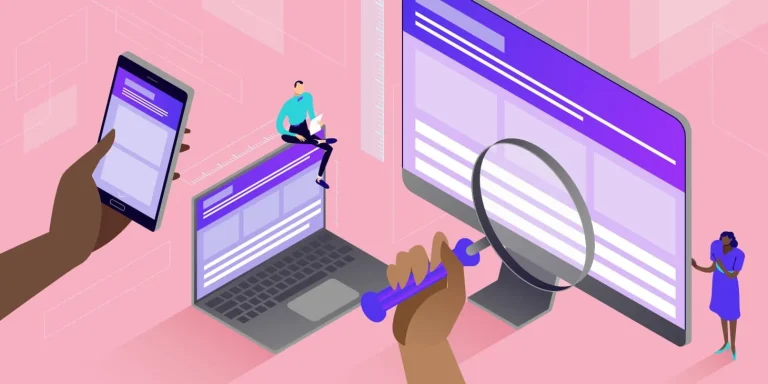
The main objective of this approach is to provide a personalized user experience that adjusts to different devices, platforms, contexts, and moments of consumption. With the advancement of technology, users interact with content in multiple ways: through mobile phones, tablets, computer screens, smartwatches, augmented reality (AR) devices, and more. Liquid content ensures that the same message or piece of content can automatically adapt to each of these devices.

In practical terms, liquid content allows the same article, video, or product to be distributed in different ways depending on the characteristics of the communication channel and user behavior. This not only improves interaction with the content, but also optimizes marketing efforts by ensuring a consistent and effective experience across all touchpoints.
Liquid content becomes an essential tool for brands seeking greater relevance in today’s market. Thanks to its adaptability, liquid content facilitates the creation of personalized experiences that ultimately contribute to a better relationship with users. As more platforms and devices continue to emerge, liquid content positions itself as a key trend for the future of digital communication.
In addition, liquid content can be efficiently implemented in marketing strategies, as it allows brands to convey their message coherently and fluidly across various channels without losing the essence of the original content. This adaptability is crucial to maintaining user attention and encouraging interaction with the content, whether on a smartphone, computer, or even augmented reality devices, all thanks to liquid content.
Benefits of Liquid Content
- Personalization and relevance: The flexibility of content makes it possible to offer highly personalized experiences. Brands can adapt their message based on the interests, behavior, and preferences of each user, increasing the relevance of the content. This is crucial at a time when consumers expect more direct and personalized interaction with brands thanks to liquid content.
- Greater multichannel reach: Because it is adaptable, liquid content is effectively distributed across various channels and devices. This ensures that brands reach consumers regardless of the platform they are using, without the need to create different versions of the same content. Liquid content enables greater efficiency in managing these channels, as it adapts to the medium, improving communication effectiveness.
- Improved user experience: Users have high expectations regarding the speed and efficiency of interactions with content. If a website or application automatically adapts its liquid content to the screen characteristics or device type of the user, the overall experience improves, which can lead to greater satisfaction and loyalty. The ability to offer well-implemented liquid content also increases the likelihood that users will engage with the brand for longer periods.
- Operational Efficiency: Companies that implement a liquid content strategy do not have to create separate versions of content for each device or platform. This reduces production costs and time, as liquid content is generated in a unified way and automatically adapts as needed. Thanks to liquid content, brands can optimize resources and maximize return on investment without sacrificing quality.
What Is Headless Consumption?
On the other hand, the concept of headless consumption is one of the most disruptive innovations in digital content management. The headless approach refers to the decoupling of the front end of a content management system (CMS) from the back end; that is, the content presentation layer is separated from the administration layer. In simple terms, headless consumption means that consumers can access content from any device or platform, regardless of the format or presentation medium.
In a traditional CMS, content and presentation are closely linked, which means that any change in the presentation or design of a website requires direct modifications to the code. In contrast, a headless CMS allows content to be managed and stored on a centralized platform, while being presented across multiple channels or devices without the need to restructure the database or management system.
This is achieved through the use of APIs (application programming interfaces), which allow content data to be delivered flexibly to any device or channel without relying on a fixed presentation structure. This capability is essential for headless consumption, as it facilitates content delivery on websites, mobile applications, IoT devices, smart displays, voice assistants, and more.
Key Characteristics of Headless Consumption
- Decoupling of frontend and backend: In a headless system, the frontend (the user-facing part) is completely decoupled from the backend (the database and business logic). This allows greater flexibility and control over how and where content is presented. This separation is the foundation of headless consumption.
- Flexibility in content distribution: Because it is not tied to a specific presentation format, content can be distributed across different communication channels without the need to rebuild each of those channels. This flexibility facilitates the implementation of headless consumption in companies that want to reach consumers across multiple devices and platforms.
- Greater scalability: By separating the frontend and backend, companies can scale their infrastructure more easily. This means that new touchpoints (such as new platforms or devices) can be added without making significant changes to the existing infrastructure. This ability to expand is key to a headless consumption experience that does not depend on structural limitations.
- Better performance and speed: A headless CMS allows content to be delivered more quickly and efficiently. Since presentation and data storage are separated, performance in terms of page load and response times improves significantly, optimizing the headless consumption experience.

Integration of Liquid Content and Headless Consumption
Although both concepts, liquid content and headless consumption, are valuable on their own, their integration represents the future of content management and distribution. Liquid content and headless consumption complement each other perfectly, as together they allow brands to be much more dynamic, agile, and adaptable to the changing needs of consumers, providing a much smoother and more personalized experience.
By integrating a liquid content approach with a headless consumption system, companies can create a robust infrastructure that allows them to deliver liquid content efficiently and flexibly across any device, platform, or context. This combined approach of liquid content and headless consumption not only improves user interaction, but also optimizes internal company processes by managing and distributing liquid content in a more agile and faster way.
With liquid content powered by a headless consumption architecture, brands can continuously adjust and adapt content in real time, ensuring that headless consumption fits perfectly with the characteristics of each device or platform. Liquid content is not limited by fixed structures, and headless consumption ensures that it can be distributed flexibly and efficiently across various channels without losing consistency.
This combined approach of liquid content and headless consumption allows companies to respond more quickly to market changes and consumer expectations, while also enabling them to offer a coherent and consistent experience across all touchpoints, regardless of format or platform. The combination of liquid content with headless consumption is, without a doubt, the path toward more modern, scalable, and effective digital content management.
Applications in Digital Marketing
- Multichannel marketing: The ability to distribute content across multiple platforms and devices in a consistent way is essential in today’s digital era. Brands that use liquid content and headless consumption can offer integrated experiences that cover all customer interactions, from the main website to social media, mobile applications, and voice-enabled devices, thanks to the flexibility provided by liquid content and headless consumption.
- E-commerce and personalization: In the field of e-commerce, content personalization is crucial. With liquid content and a headless consumption approach, brands can adapt the shopping experience based on consumer behaviors and preferences. For example, the same product can be presented in different ways depending on whether the user accesses it from a mobile phone, a tablet, or a computer, all thanks to the power of liquid content and the headless consumption infrastructure.
- Omnichannel brand experiences: Omnichannel experiences allow consumers to interact with a brand across different channels in a seamless way. The combined use of liquid content and headless consumption enables brands to offer a frictionless experience across all touchpoints, from a social media ad to an online store, or even a query through a virtual assistant, all thanks to the integration of liquid content and headless consumption.
- Automation and optimization: The ability to distribute and personalize content at scale is crucial for marketing campaigns. By combining liquid content and headless consumption, brands can automate content distribution effectively, adapting to changes in consumer behavior in real time. In addition, companies can optimize their campaigns based on collected data, improving the relevance and impact of their marketing efforts through the use of liquid content and headless consumption.
Challenges and Considerations
Although the advantages of liquid content and headless consumption are clear, there are certain challenges and considerations that companies must take into account when implementing them. While the flexibility and adaptability offered by these approaches are undeniable, their effective integration can be complex if existing technological infrastructures are not prepared to adopt liquid content or headless consumption. Companies must evaluate whether their current systems are capable of supporting these technologies, which may involve a significant infrastructure upgrade.
One of the main challenges of implementing liquid content and headless consumption is the complexity of integration. Separating content management systems from the content presentation layer requires careful planning and an experienced development team. To ensure that both liquid content and headless consumption function correctly, companies must invest in team training and in the acquisition of specialized tools to manage this transition smoothly.
Another significant challenge lies in content quality management. With the distribution of liquid content across multiple channels and devices, maintaining content consistency and quality is crucial. Headless consumption facilitates this distribution, but it also presents the challenge of ensuring that liquid content remains relevant and appropriate for each platform or context. Companies must establish strict quality control processes to monitor how content is presented and consumed at each touchpoint.
Initial investment is another aspect that must be considered when adopting liquid content and headless consumption. These technologies, while powerful, require a significant investment in terms of infrastructure, staff training, and the integration of new tools. For companies that already rely on legacy systems, this investment can be substantial. However, the long-term return on investment can be considerably higher due to the efficiency and adaptability provided by both liquid content and headless consumption.
Finally, the adoption of liquid content and headless consumption can lead to improved organizational agility. Companies that manage to overcome the initial challenges of integration and management can leverage these technologies to deliver a personalized and efficient user experience. By distributing liquid content dynamically and flexibly across different devices and channels through headless consumption, brands not only optimize their marketing efforts but also improve their ability to adapt quickly to market changes.

Liquid content and headless consumption strategies are radically changing the way brands manage and distribute their content. These approaches enable unprecedented flexibility by allowing liquid content to dynamically adapt to the needs of the modern consumer, delivering personalized and consistent experiences across all channels.
Headless consumption, by decoupling content presentation from content management, makes it easier for brands to deliver content efficiently and adaptively, ensuring that liquid content flows seamlessly to any device or platform.
Although the implementation of liquid content and headless consumption may present certain technical and integration challenges, the benefits far outweigh these obstacles. The ability to distribute liquid content in an agile and efficient way across different channels, using headless consumption to separate content management and presentation, offers brands greater scalability, personalization, and efficiency. These strategies become a crucial competitive advantage for any brand seeking to remain relevant and effective in today’s digital market.
The future of digital marketing is not just about content distribution; it is about creating fluid, dynamic, and adaptive experiences that align with user expectations and behaviors. In this future, both liquid content and headless consumption will be fundamental for brands to deliver high-performance omnichannel experiences.
These approaches will transform the way brands interact with consumers, ensuring that liquid content adapts to any platform and that headless consumption facilitates efficient and effective content delivery across multiple devices.
If your brand is ready to leverage the power of liquid content and headless consumption, at MoodWebs we can help you implement these strategies effectively. We have the experience and tools needed to transform your digital presence. Contact us today at [email protected]and take the next step toward a personalized, scalable, and efficient user experience.
 EN
EN  ES
ES