
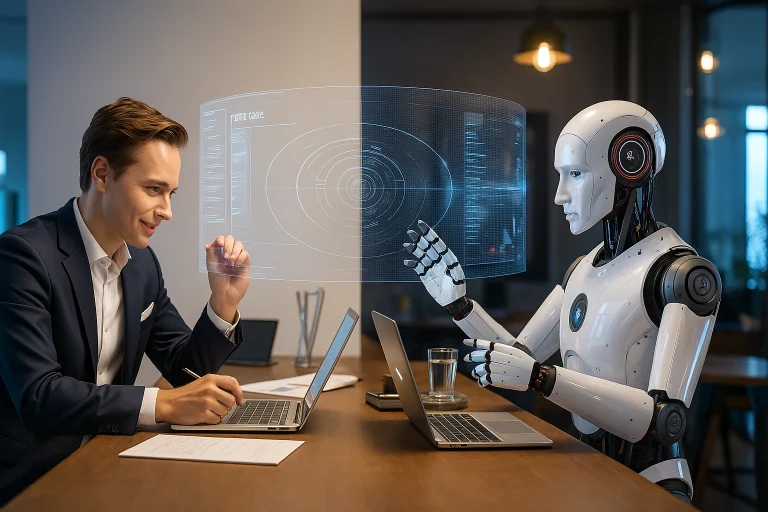
In the last decade, marketing has experienced significant transformations thanks to advances in digital technology, artificial intelligence (AI), AI-powered predictive analysis, AI-based automated systems, and the shift in consumer expectations. As brands seek to connect with their audiences more effectively, an important debate has emerged about marketing based on “human authenticity” versus the growing automation and use of AI, AI applied to personalization, AI for segmentation, and AI for content generation.
This dilemma reflects the tensions between the human and the digital, between the authentic and the processed, which characterize the relationship between brands and consumers in the 21st century, especially when AI intervenes at every stage of the process. On one hand, we have marketing based on “human authenticity,” which appeals to values of genuine connection, empathy, and human emotions.
On the other hand, artificial intelligence, with its ability to process enormous amounts of data, create personalized content with AI, manage automated interactions with AI, and optimize strategies in real time through AI, offers brands the opportunity to interact with consumers in a more efficient way, although sometimes perceived as impersonal due to the predominance of AI over human intervention.
In this MoodWebs article, we explore how these two forces are shaping the future of marketing, the benefits and challenges of each approach, and how brands can find a balance between both, especially in a context where AI continues to expand and dependence on AI becomes increasingly inevitable.

Human authenticity: A value that persists in marketing
Authenticity is one of the most important values in modern marketing, even in an environment where AI influences almost every stage of the communication process. Consumers seek brands that align with their principles, that speak honestly, and that behave transparently—something they often contrast with automated messages produced by AI. In a world where distrust in institutions and brands has increased—partly due to the excessive use of AI that makes it difficult to distinguish what is real from what is artificial—authenticity has become a precious asset in the face of the saturation of AI-generated content.
Marketing based on human authenticity focuses on connecting with consumers through real stories, genuine characters, and a human-centered approach, clearly differentiating itself from narratives produced by AI. Brands that adopt this strategy tend to emphasize transparency in their processes, the sustainability of their products, and social commitment—elements that are perceived as more credible when they are not seen as fabricated by AI. These actions are viewed as a sincere attempt to provide value to society, beyond the simple sale of products, and as a necessary counterbalance to the growing presence of AI in marketing.
A clear example of authentic marketing is the one used by many cosmetic and fashion brands that promote diversity and inclusion in their campaigns, avoiding dependence on AI-generated representations that could lose the “human touch.” Companies like Dove, with its “Real Beauty” campaign, have highlighted the value of representing beauty in all its forms, sizes, and colors, positioning themselves in contrast to artificial images created by AI. These brands not only sell products, but also tell stories that resonate with the values and emotions of their consumers, differentiating themselves from the emotional neutrality of AI.
Additionally, in the context of authenticity, social media plays a crucial role. Users are increasingly demanding with the messages they receive from brands, especially now that they quickly identify when a message has been created by AI. For this reason, they prefer brands that appear close, accessible, and transparent, and not solely dependent on AI-generated content.
Brands that appear genuine and human tend to generate greater loyalty and trust, even when they use AI in a complementary way. This approach is also reflected in influencer marketing, where consumers expect brand ambassadors to represent real values and not an image fabricated by AI, thus reinforcing the importance of the human factor in the face of the growing omnipresence of AI.
AI in marketing: Efficiency and personalization
On the other hand, artificial intelligence has burst into the world of marketing with the aim of making commercial strategies more efficient, especially thanks to AI, AI applied to predictive analysis, and AI aimed at massive automation.
AI has the ability to analyze large volumes of data, identify behavior patterns, and predict consumer preferences with astonishing precision—something only AI can execute at that scale. This allows brands to create highly personalized campaigns that speak directly to the individual needs of each consumer through AI systems that constantly learn and adjust.
A typical example of how AI is used in marketing is product recommendation systems powered by AI. Platforms like Amazon and Netflix use advanced AI algorithms to suggest products or content based on the user’s browsing and purchase history. This type of personalized marketing not only improves the customer experience, but also increases conversion and loyalty rates thanks to AI-based intelligent filtering.
In addition, AI is also used to automate content creation. AI-based chatbots, for example, are capable of interacting with consumers in real time, solving questions, and providing personalized assistance, all without human intervention. Automated email marketing campaigns powered by AI also allow brands to send specific messages to users based on their preferences or past behaviors, thanks to AI’s advanced segmentation.
Although AI enables incredibly precise personalization, it also raises concerns about the emotional disconnection it may generate. As more and more aspects of marketing become automated through AI, consumers may feel that they are interacting with machines instead of real people. This could create a disconnect in terms of the authenticity consumers value so much, especially when the presence of AI surpasses human intervention in communication.

Advantages of Human Authenticity Marketing
- Generation of trust: Authenticity generates a genuine emotional bond between the brand and consumers. People tend to trust brands that appear authentic and transparent, which increases long-term loyalty.
- Emotional connection: Authentic stories, especially those that address topics of social interest, can create a deep emotional connection with the audience. Emotions are powerful drivers of decision-making and can significantly influence consumer behavior.
- Differentiation in a saturated market: In a market saturated with options, brands that manage to stand out for their authenticity are more likely to gain consumer preference. Companies that move away from traditional corporate approaches and appear more human can capture attention in a sea of generic messages.
Advantages of AI-based marketing
- Personalization of the user experience: AI allows brands to offer personalized experiences based on data, and it is precisely AI that analyzes each interaction in depth to increase the relevance of messages. Thanks to AI, the probability of conversion increases because AI algorithms can identify patterns and preferences much more efficiently than human beings, processing information at a speed and scale that only AI can reach.
- Efficiency and scalability: Automated AI systems can perform repetitive tasks, manage complex processes through AI, and consume large volumes of data much faster than humans. This capability of AI significantly improves operational efficiency and allows brands to reach a broader audience more effectively, taking advantage of the constant automation facilitated by AI. AI also reduces errors and optimizes workloads that would be impossible to handle without AI.
- Real-time optimization: AI can also analyze the results of marketing campaigns in real time, interpreting dynamic variables through AI models that learn and adjust continuously. This allows brands to optimize their efforts, correct deviations instantly thanks to AI, and maximize the performance of their campaigns. In short, AI becomes an indispensable tool for making real-time decisions supported by data processed and reinterpreted by AI itself.
The risk of the dehumanization of marketing
Despite the advantages of AI, one of the main challenges is that automation driven by AI can lead to a dehumanization of marketing. When consumers interact only with algorithms or AI-based bots, they may feel disconnected from the brand, especially when they perceive that AI completely replaces human interaction. In a world where consumers increasingly value authentic relationships, this risk is real and increases as AI becomes more omnipresent at every point of contact.
The perception that brands are using AI only to maximize their profits without taking into account the emotional needs of consumers can be harmful. When AI dominates communications and strategic decisions without a human balance, the emotional connection can fade.
Brands that depend too much on automation through AI may lose the ability to establish authentic relationships with their audiences, which could result in a decrease in long-term loyalty and trust. In this scenario, AI stops being a complementary tool and becomes a barrier, affecting the sense of closeness that consumers expect in their interactions.
Is hybrid marketing possible?
The most probable answer to the question of whether human-authenticity marketing can coexist with artificial intelligence is yes, but with certain precautions, especially when AI intervenes constantly. Brands that manage to balance both strategies can take advantage of the best of both worlds, combining the efficiency of AI with the emotional warmth that AI still cannot replicate.
An example of this is the use of AI to collect data, analyze behaviors, and personalize the customer experience, while brands maintain a human approach in the way they communicate their values and relate to their audience. Digital platforms, such as social networks, offer an ideal space for brands to maintain their humanity while using AI to efficiently manage their interactions with users. In this way, AI integrates without replacing human authenticity, acting as continuous support through AI systems that organize, filter, and optimize.
Brands can use AI to perform data analysis and obtain valuable information about the interests and behaviors of their customers, taking advantage of advanced AI models that interpret trends with precision. With this information, they can create authentic content that truly resonates with the needs and desires of their audiences, even when part of the understanding work is done by AI. In this sense, AI acts as a tool to enrich authenticity, not as a replacement for it, allowing human creativity to be complemented by the analytical power of AI.

Marketing in the digital era is witnessing a radical transformation thanks to technological innovations, especially those driven by AI, AI applied to automation, and AI oriented toward massive data analysis. However, this does not mean that human authenticity should be relegated to second place; on the contrary, as AI grows in presence, the need for genuine, close, and human content becomes even more relevant. Brands that manage to find a balance between the advanced personalization offered by AI and the humanization that can only come from human sensitivity will be better positioned to thrive in a highly competitive environment where AI is already an essential part of the ecosystem.
The future of marketing will likely move toward increasingly close collaboration between the analytical and operational capabilities of AI and the need to establish authentic connections with consumers. In this scenario, AI will function as a strategic tool to understand patterns, anticipate needs, and optimize processes, while human authenticity will be the emotional bridge that allows brands to remain relevant.
Brands that understand how to use technology to improve the human experience without losing their soul—allowing AI to enhance but not replace the essence of their message—will be the ones defining tomorrow’s marketing. In this way, the coexistence between AI and authenticity will become a new standard, where AI provides precision and agility, and the human element provides trust and meaning.
In this context, businesses need intelligent strategies that integrate AI in a balanced, creative, and authentic way. And that is precisely the type of approach we offer at Moodwebs, where we combine technological innovation, AI-based solutions, strategic design, and a deeply human vision of marketing.
If you are looking for professional support to strengthen your brand, improve your digital presence, implement AI effectively, or elevate the authenticity of your communication, we will be happy to help you. You can write to us directly at [email protected] and take the first step toward more human, more intelligent marketing that is truly prepared for the future.
 EN
EN  ES
ES