
In today's digital world, where user expectations are constantly evolving, the competition for online attention has intensified. Users no longer settle for just relevant content; they seek a fast, seamless, and uninterrupted experience. This means that the performance of a website, which includes factors such as loading speed, interactivity, and visual stability, has become a critical aspect to ensure a positive experience.
As businesses and content creators struggle to capture their audience's attention, a website that does not respond quickly or has design errors may cause users to leave before exploring the content it offers. Therefore, a website must not only be informative and useful but also efficient and easy to navigate.
Google, aware of this growing demand for quality and smoothness, has implemented a series of metrics focused on user experience, known as Google Core Web Vitals. These Google Core Web Vitals metrics not only measure a site's performance in terms of speed and usability but also directly influence SEO ranking. With the Page Experience update, Google has integrated these factors into its search algorithm, giving priority to sites that provide a better user experience.
This change in Google Core Web Vitals has forced website administrators to focus on optimizing these metrics as an essential strategy to improve their visibility in search results. In this article from MoodWebs, we will dive into what these Google Core Web Vitals metrics are, why they are crucial for SEO, and how you can implement optimization strategies to improve the performance and user experience of your website.
What Are Google Core Web Vitals?
Google Core Web Vitals are three key metrics that Google uses to measure the quality of a user's experience on a website. While there are many other metrics that Google considers when evaluating a site (such as load speed, security, or relevant content), Google Core Web Vitals specifically focus on the most visible and immediate aspects of the browsing experience.
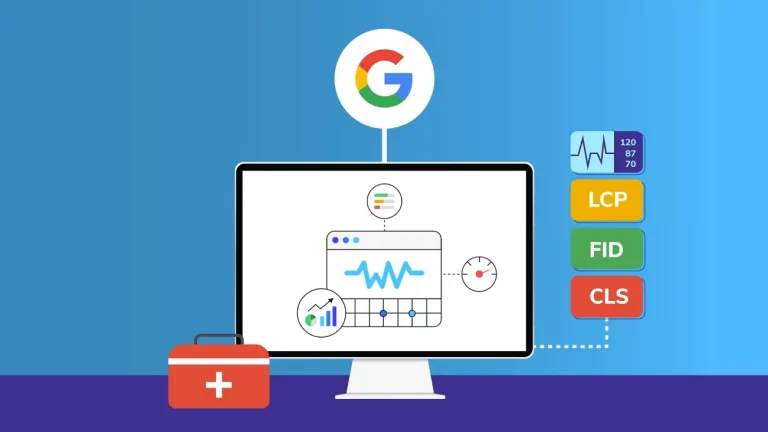
These Google Core Web Vitals metrics consist of three key variables that determine a website's performance and its interaction with the user:

1. Largest Contentful Paint (LCP)
Google Core Web Vitals' LCP measures the time it takes for the largest and most visible content in the user's browser window to load. This content is typically a large image or a block of text. A fast LCP is crucial for Google Core Web Vitals because it means the user sees content quickly, improving the perceived speed of the site and reducing the likelihood of abandoning the page before it finishes loading.
Google sets the ideal LCP loading time at 2.5 seconds or less. If the load time is greater than 2.5 seconds, the user experience is negatively affected, and it can harm SEO.
2. First Input Delay (FID)
Google Core Web Vitals’ FID measures the time it takes for the browser to respond to the user's first interactive action, such as clicking a button or linking to another page. If a site has a high FID, the user will experience a noticeable delay, which causes frustration.
The FID of Google Core Web Vitals is important because it reflects how quickly a site becomes interactive, which directly impacts the user experience. An ideal FID for Google Core Web Vitals is less than 100 milliseconds. If FID is high, users may perceive the page as frozen or unresponsive, increasing the bounce rate.
3. Cumulative Layout Shift (CLS)
Google Core Web Vitals’ CLS measures the visual stability of a page, evaluating how much the elements on the page shift while it loads. Unexpected layout shifts can be irritating for users, especially when a button or link moves before the user can interact with it.
A CLS value for Google Core Web Vitals below 0.1 is considered acceptable. If a page has a high CLS, users may experience a disorganized and unreliable experience, which can decrease their overall satisfaction.
The Influence of Google Core Web Vitals on SEO
Since the Google Page Experience update in 2021, Google started integrating these Google Core Web Vitals metrics into its ranking algorithm, making them decisive factors for SEO ranking of websites. Since then, it’s not just about offering relevant and well-optimized content, but also ensuring the site loads quickly, is interactive, and stable, thereby improving the overall user experience.
1. Direct Impact on Search Ranking
Google Core Web Vitals metrics are now considered a ranking factor. In other words, Google prioritizes sites that provide a positive user experience in search results. This is one of the most important updates Google has implemented in its ranking algorithm in recent years.
If your site has long load times or presents issues with interactivity or visual stability, you are likely to see a decrease in your ranking. Additionally, a site that has optimized Google Core Web Vitals metrics and meets Google’s established standards can outperform competitors who do not optimize these aspects.
Case Study: A study by Moz reveals that websites that optimize their performance with respect to Google Core Web Vitals tend to have a better click-through rate (CTR) on search engine results pages (SERPs). Users tend to prefer fast and stable sites, which translates into more traffic, and consequently, a better position in search engines.
In terms of SEO, a site that provides an excellent user experience (through fast load times, efficient interactivity, and a stable design) is more likely to achieve better positions in SERPs. This is crucial for Google Core Web Vitals, as visibility in search results is a key factor for attracting more organic traffic.
2. Reduction of Bounce Rate
One of the direct consequences of not optimizing Google Core Web Vitals is a high bounce rate. Users, when they don’t find what they expect in terms of loading speed, visual stability, or interactivity, leave the page quickly. This not only affects the user experience but also your ranking on Google. Bounce rate is one of the factors Google uses to assess a page's relevance; if users leave the site quickly, Google assumes the page is irrelevant or not providing what the user is looking for.
According to Vercel, sites with an optimal Google Core Web Vitals score not only retain more users but also have higher conversion rates. This means that good optimization of performance metrics can significantly increase the effectiveness of your website in terms of sales or lead generation. Therefore, a low bounce rate not only improves SEO but also enhances the commercial performance of the site.

3. Greater Visibility in the SERPs
The fact that Google uses Google Core Web Vitals as a ranking factor has changed the way search engines perceive user experience. If your page meets the ideal criteria for LCP, FID, and CLS of Google Core Web Vitals, it is likely to be favored in the SERPs (Search Engine Results Pages) compared to similar sites that do not. This additional visibility not only improves the traffic to your page but also the chances of users clicking on the results.
This also means that sites that do not optimize their performance metrics with Google Core Web Vitals will have more difficulty competing with other sites that are well optimized. For example, if one site has a slow LCP and another has a fast LCP, Google tends to rank the faster site higher in search results since it provides a more satisfying experience for users.
How to Improve Your Google Core Web Vitals to Boost SEO?
Optimizing Google Core Web Vitals is a crucial task for any website owner who wants to maintain good SEO performance. Below, we explore some of the key steps you can take to improve each of the three Google Core Web Vitals metrics:
1. Optimizing LCP (Largest Contentful Paint)
LCP is crucial in Google Core Web Vitals because it measures how long it takes for the most important content to appear for the user. Here are some tips to improve this metric:
- Optimization of images and multimedia resources: Use lighter image formats like WebP and adjust dimensions to avoid unnecessary loads. Additionally, ensure that images load only when they are visible to the user by implementing "lazy loading."
- Minimization of JavaScript: The execution of heavy scripts can slow down the loading of your page. Optimize and minimize your JavaScript code, or consider splitting it so that only the necessary parts load at a given time.
- Use of a CDN (Content Delivery Network): A CDN distributes your site’s resources from servers located around the world, speeding up load times by bringing resources closer to the user.
2. Improving FID (First Input Delay)
FID measures the responsiveness of a website, which is crucial for user interaction according to Google Core Web Vitals. A high FID can frustrate users who try to interact with a site because there is an obvious delay between their action and the page’s response.
- Reduce render-blocking scripts: Some scripts can delay a site’s responsiveness. It's important to ensure that scripts do not block the rendering of the main page.
- De-fragment scripts and resources: Minimize and combine your CSS and JavaScript files to reduce the number of HTTP requests needed to load the page.
- Use of JavaScript optimization services: Technologies like React or Vue.js can efficiently manage the loading of interactive elements, improving FID.
3. Reducing CLS (Cumulative Layout Shift)
Google Core Web Vitals' CLS measures the visual stability of a page and is essential for providing an uninterrupted experience to users. A high CLS occurs when the content of the page shifts unexpectedly, which can be annoying to the user.
- Ensure that image and video resources have a defined size: Do not let multimedia resources load dynamically without a defined size, as they can change the layout of the page.
- Avoid pop-up ads that affect the layout: Ads and other interactive elements that change the content layout can generate a high CLS if not properly managed.
- Use standard fonts or load fonts in a controlled way: Web fonts can generate layout shifts if they are not loaded correctly, causing the content to move when the fonts change.
The Future of Google Core Web Vitals and Its Impact on SEO
Although Google Core Web Vitals are already important ranking factors in Google, it is likely that their impact will expand even further in the future. Google has made it clear that it intends to continue refining the measurement of user experience, and it’s not hard to imagine that performance metrics will continue to play a central role in the evolution of its algorithms.
Ongoing updates from Google, such as those involving artificial intelligence and next-generation search, could cause Google Core Web Vitals to expand to include new metrics or modify the existing ones. Performance optimization will always be an essential factor for SEO, especially as mobile device usage and faster and more diverse network connections increase.

Google Core Web Vitals have changed the way website owners must approach SEO. Now, it's not only important to have quality content but also to provide an exceptional user experience through a fast, interactive, and stable site. The LCP, FID, and CLS metrics of Google Core Web Vitals are determining factors in search engine rankings and should be considered a priority if you want to effectively compete in the digital world.
By optimizing these metrics, you will not only improve your SEO but also increase user retention, which leads to higher conversions and better overall performance for your website. In a constantly changing web environment, user experience is an area that will always have room for improvement, and Google Core Web Vitals is a great way to start.
If you want to improve your use of Google Core Web Vitals for better SEO results for your business, contact us at [email protected]. We have a team of experts to guide you with the best digital marketing strategies.
 EN
EN  ES
ES