
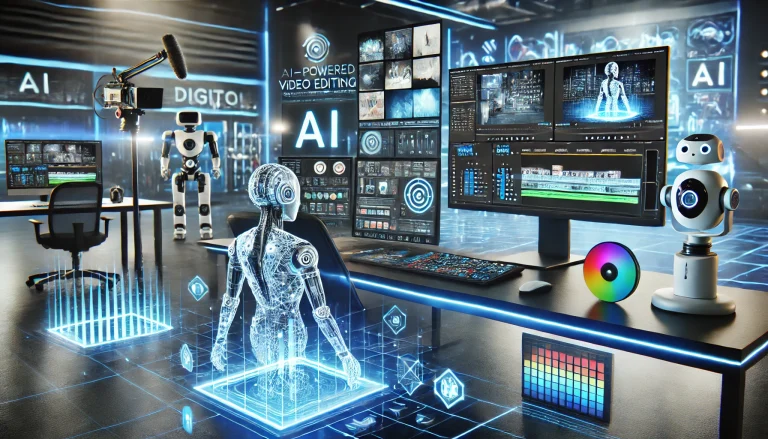
For decades, video editing was a process reserved exclusively for specialists with technical training, sophisticated equipment, and expensive professional software. Audiovisual productions—whether for advertising, education, or entertainment—required long hours of manual work to achieve a high-quality finish. However, the emergence of artificial intelligence (AI) in this field has begun to radically transform the way we create visual content.
Today, thanks to advances in AI, anyone with internet access can perform professional-looking video editing in a matter of minutes. Tasks that once required specific skills—such as cutting clips, inserting subtitles, improving audio, or adjusting lighting for video editing—can now be executed automatically or with assistance, producing surprising results.
This AI video editing phenomenon has democratized audiovisual creation, allowing entrepreneurs, educators, content creators, and small businesses to compete on equal terms with major production companies. Below, the MoodWebs team presents some key insights into AI video editing and the leading trending tools.
What Is an AI Video Editor?
An AI video editor is a platform or software that uses intelligent algorithms to assist the user throughout the editing process. Unlike traditional editors, where every adjustment must be made manually, these systems are capable of making autonomous decisions or offering smart suggestions. Essentially, they function as virtual assistants that understand content, anticipate needs, and automate repetitive tasks.
For example, if a long video is uploaded, an AI editor can detect unnecessary silences, identify the most important moments, generate real-time subtitles, adjust sound levels, and recommend visual effects. Some video editing tools even allow you to convert a written article into an animated video with voiceover, music, and transitions. This ability to interpret language and multimedia content opens up a new universe of possibilities in the world of video editing.
This technology is not only focused on automation but also on enhancing the creative experience of video editing. By delegating technical tasks to AI, the user can concentrate on the narrative, visual, and strategic aspects of the content. In this way, AI does not replace the human editor but amplifies their production capacity, making them more efficient, creative, and versatile.

Why Use AI to Edit Video?
The use of artificial intelligence in video editing responds to a growing need: to create content quickly, with good quality, and without relying on advanced technical knowledge. In a digital environment where the demand for video is exponential—whether for social media, virtual education, digital marketing, or internal communication—AI offers clear and tangible advantages in video editing.
One of the main reasons to use AI in video editing is time savings. Tasks that used to take hours are now completed in minutes. For example, manually subtitling a long video could take a long time, but today there are tools that do it automatically with surprising accuracy, even in multiple languages. This efficiency in AI video editing allows content to be published more frequently and adapt to the pace required by current digital platforms.
In addition to time, quality improvement is another significant advantage of AI video editing. Advanced video editing algorithms can automatically correct lighting issues, eliminate background noise in audio, stabilize shaky images, and adjust framing to optimize focus. These features were previously only available in professional video editing suites and required hours of post-production.
AI also boosts creativity. By freeing the creator from technical tasks, it allows them to focus on the message, narrative structure, and emotional connection with the audience. There are even video editing tools that offer creative recommendations based on the video’s intent, emotional tone, or the preferences of the target audience, optimizing content to achieve greater impact.
In short, using AI in video editing not only simplifies the process but also improves and expands it, making it possible for anyone to create high-level visual content.
The 5 Best AI Video Editors
As more users adopt AI-assisted video editing, dozens of tools have emerged on the market. However, not all offer the same quality, versatility, or accessibility in video editing. Below, we provide an in-depth look at five of the most outstanding video editing platforms, analyzing not only their features but also their real impact on the democratization of audiovisual creation.
1. Opus Clip
Opus Clip is a video editing tool that has quickly gained popularity among content creators for one simple reason: it efficiently solves a common problem. Many video producers create long-form content, such as interviews, tutorials, or podcasts. But the real diffusion potential of this material lies in short fragments adapted for platforms like TikTok, Instagram Reels, or YouTube Shorts. This is where Opus Clip becomes an essential video editing tool.
This platform automatically analyzes a long video, identifies the most engaging or informative parts, and generates short clips in vertical format optimized to capture attention in seconds. It does this using natural language models and computer vision to evaluate facial expressions, vocal emphasis, and informational density.
The result: a set of mini videos ready to publish, with animated subtitles, smooth transitions, and dynamic editing. This saves hours of work, improves social media presence, and allows content to reach further with no extra effort.

2. Descript
Descript has redefined what video editing means. Its basic concept is revolutionary: transforming video into editable text. The user uploads a video, the platform generates a transcription, and from there you can edit by deleting or modifying fragments of the text, which is directly reflected in the video.
This logic turns audiovisual editing into something as simple as correcting a document. If you said the wrong word or there was an awkward pause, just delete it from the text, and Descript automatically cuts that part of the clip. Additionally, its Overdub feature allows you to create new lines of dialogue with a synthetic voice trained on your own voice, which is useful for later corrections or additional narrations without needing to record again.
These functions make Descript a powerful video editing tool for podcasters as well as videographers, communicators, or educators who need flexibility and speed.
3. Filmora 14 with AI
Filmora has been an attractive option for years for those seeking a balance between ease of use and professional features in video editing. With version 14, artificial intelligence has been integrated more deeply, turning the platform into a genuine creative co-pilot. It’s not just about automation, but about enhancing user decisions in real time.
Among its most notable functionalities are automatic color correction, ambient sound enhancement, smart reframing (which adapts scenes for different formats), and subtitle generation. Additionally, Filmora allows generating videos directly from text, which is an ideal solution for quick advertising campaigns, institutional content, or educational videos.
This accessibility, combined with its intuitive visual interface and visual effects library, makes it an excellent choice for semi-professional creators, freelancers, and small production companies in video editing.
4. Eleven Labs
While many tools focus on the image, Eleven Labs specializes in an equally crucial aspect of audiovisual production: the voice. This video editing platform has revolutionized AI voice-over generation, offering synthetic voices that sound surprisingly natural, with emotional intonations, realistic pauses, and precise pronunciation in multiple languages.
The video editing tool allows users to write a script and transform it into professional audio by choosing from a wide range of voices. It also offers the option to clone a human voice, training a model from recordings. This feature is especially useful for creating consistent narrations across several videos without the need to record manually each time.
Eleven Labs is becoming a standard for explanatory videos, educational content, and corporate presentations, thanks to its audio quality and ease of use.
5. Pictory.ai
Pictory is probably one of the most comprehensive tools for transforming written content into video. Its approach is ideal for those who already have textual content, such as blog articles, newsletters, or scripts, and want to convert it into attractive visual content for social networks or educational platforms.
By uploading a text or URL, Pictory uses AI to analyze the content, identify key points, and match them with video clips, stock images, and music. It then generates a video with smooth transitions, automatic subtitles, and the possibility to include AI-generated voice-overs.
This process automation makes Pictory an ideal tool for marketing teams, SEO content editors, bloggers, and education professionals. Being cloud-based, it allows work from any device without requiring heavy installation.
How Are These Video Editing Tools Democratizing Audiovisual Production?
The real revolution these video editing platforms bring is not only technical but social and cultural. Until recently, creating high-quality audiovisual content was out of reach for millions of people worldwide. Expensive equipment, technical knowledge, professional software, and, in many cases, specialist help were needed. Today, that has changed.
Thanks to AI, someone with an idea and a smartphone can produce a quality video, subtitled, with voice-over, and adapted for social media in less than an hour. This has allowed people from historically excluded communities to express themselves, educate, undertake business, or inform without economic or technological barriers. AI not only facilitates access to tools but levels the playing field for millions of new creators.
Moreover, these tools encourage a culture of continuous learning. Many users who start using automatic functions gradually acquire knowledge about narrative rhythm, visual structure, or sound editing. Thus, AI also acts as a bridge between amateurism and professionalization in video editing. As more people experiment and create, the diversity of voices in the digital ecosystem increases, enriching global content.
Emerging Trends and the Future of AI Video Editing
The integration of artificial intelligence into video editing is just beginning. What today seems advanced will soon be surpassed by new innovations that will further expand creative possibilities. Some of the most interesting emerging trends in video editing include automatic content personalization, emotion-based editing, and real-time content generation.
One of the most promising directions is AI’s ability to generate complete videos from simple instructions. Tools like Synthesys or DeepBrain AI already allow the creation of presentations narrated by realistic human avatars that speak multiple languages. These video editing solutions are being used in education, corporate training, and global marketing. Their potential to scale multilingual content at low cost is enormous.
Another trend is emotional editing. Some video editing systems are beginning to analyze facial expressions, voice tone, and keywords to identify the emotional tone of a video. This will allow editors to adapt the visual style (colors, music, transitions) to match the emotional intent of the content. Imagine a platform that detects whether your message is inspiring, sad, or comedic, and automatically adjusts the video’s aesthetics to amplify its impact.
The future also points to deeper integration with social media and distribution platforms. Some video editing tools already allow direct uploading to TikTok or YouTube with optimized metadata. This will be followed by automatic editing based on video performance: if a clip isn’t working, AI could suggest an alternative version or changes in the title, cover color, or first second of the video.
Finally, we will see growth in cloud collaborative environments where multiple editors can work in parallel from different locations, aided by AI assistants that synchronize changes, suggest improvements, and maintain stylistic consistency. All this will further reduce production time and facilitate remote work in global teams.
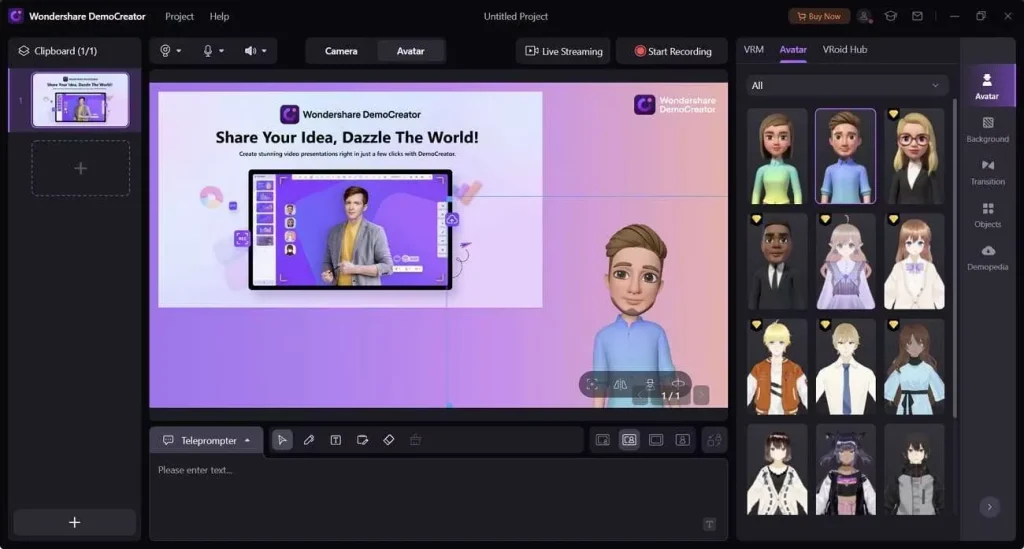
AI video editing has ceased to be a futuristic innovation and has become a daily, accessible, and powerful tool. Its impact goes far beyond simple automation: it is transforming how we communicate, teach, sell, and tell stories. Thanks to these AI video editing tools, creativity is no longer conditioned by technical knowledge or budget. It is within everyone’s reach.
Each of the mentioned video editing platforms—Opus Clip, Descript, Filmora, Eleven Labs, and Pictory—offers a different window into this revolution. Some prioritize ease of use, others technical quality, and others creativity. But all share the same goal: to empower the user to create better content, faster, and with greater impact.
Audiovisual democratization is already underway. Regardless of your experience, location, or resources, you can be an active part of it. All you need is a story to tell and an AI tool to help you tell it well. If you want to learn more about these AI video editing tools and how to integrate them into your current workflows, write to us at [email protected]. We have a digital marketing team proficient in AI ready to advise you on this new step in technological updating.
 EN
EN  ES
ES