
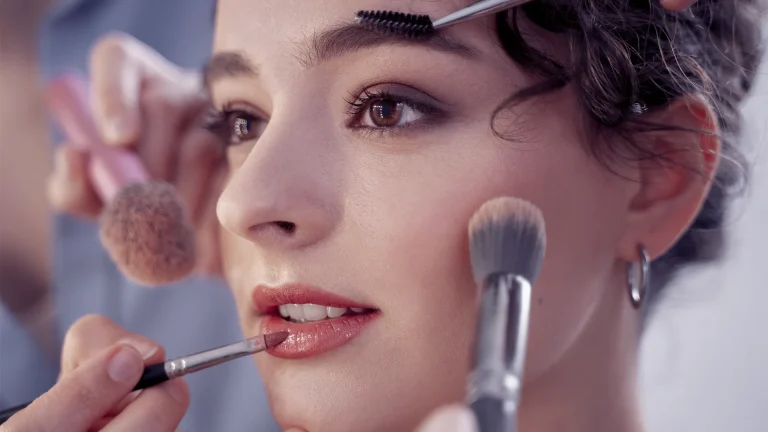
We live in an era where advertising images from marketing, social media, and traditional media not only shape what we consume, but also how we perceive ourselves and others. In this context, the representation of female beauty has been constructed based on marketing visual stereotypes that promote extremely narrow, rigid, and, in many cases, unattainable ideals for most women.
This cultural construction through marketing of what is considered “beautiful” is not a harmless or superficial phenomenon: it has deep and lasting effects on self-esteem, daily decisions, psychological well-being, and even the physical health of millions of people around the world.
In this article from MoodWebs, we will carefully examine how the beauty standards imposed by marketing negatively influence women’s perception of their own bodies—especially during youth, a crucial stage in the formation of personal identity. We will also address why it is urgent and necessary to rethink marketing from an ethical perspective—one that respects and values diversity and the emotional health of the audience, rather than perpetuating harmful stereotypes.
What is the beauty standard in marketing?
The beauty standards prevailing in marketing are not the result of a random or spontaneous process. Rather, they are social constructions that have been established and reinforced over decades by brands, agencies, and marketing content creators who carefully select models and public figures that embody specific body types: extremely thin women, tall, with Eurocentric features, flawless skin, perfect hair, and stylized figures.
This image, repeated ad nauseam in marketing, is not only intended to sell a product or service; it also conveys a subliminal message that influences culture and social expectations: this is the body that is valued, desired, rewarded, and socially considered worthy.

The main problem is that this marketing-driven model of beauty does not represent the real diversity of the female population. On the contrary, this image transmitted by marketing excludes and marginalizes those who do not fit this pattern, generating constant pressure to reach an ideal that, in many cases, is impossible without digital filters, photo retouching, or invasive cosmetic procedures.
In doing so, a culture of dissatisfaction and constant comparison is promoted, which ends up damaging personal perception. But these marketing representations do not operate only on a visual level; they also work on a deeply emotional and symbolic level. In the most common marketing campaigns, women who meet these standards are often associated with concepts such as success, happiness, social acceptance, and overall well-being.
The implicit message conveyed by marketing is forceful: to achieve a full and satisfying life, you must first look like them. This direct connection between appearance and personal worth promoted by marketing may seem superficial, but it has real and tangible consequences in the daily lives of many women.
The psychological impact of marketing: Beyond aesthetics
Various scientific and psychological studies have shown that constant and frequent exposure to this type of marketing imagery causes a distorted perception of body reality, especially among young women and adolescents. By repeatedly comparing themselves to these unrealistic and stereotyped models, many experience deep dissatisfaction with their own bodies, triggering a vicious cycle of anxiety, low self-esteem, and self-demand.
This dissonance between the real body and the internalized ideal promoted by marketing generates complex and harmful feelings such as insecurity, anxiety, frustration, shame, and, in more severe cases, may lead to clinical conditions such as depression or eating disorders. Evidence shows that even a brief exposure to marketing images with extremely thin bodies can affect people’s emotional states and immediate decisions.
For example, after viewing marketing ads that present very thin models, women tend to feel less comfortable with their bodies, show greater concern about their weight, and a tendency to consume low-calorie foods or engage in compulsive exercise—not so much to care for their health, but to try to fit into an imposed ideal.
These types of behaviors, which may initially seem harmless or part of a healthy lifestyle, actually hide a deeper issue. When they become recurrent and intense, they can lead to severe eating disorders such as anorexia nervosa, bulimia nervosa, or binge eating disorder—conditions that affect not only physical health but also mental and emotional well-being.
The media construction of the female body: A historical evolution
To fully understand the problem of beauty standards in marketing, it is essential to review how the image of women has evolved in advertising and the media. In the 1950s and 60s, the dominant female archetype in marketing was that of the traditional housewife: compliant, caring, self-sacrificing, and often reduced to a secondary societal role. This image reflected and reinforced the social expectations of the era, based on domesticity and family service.
However, starting in the 1970s and 80s, the figure of women began to transform in the world of marketing. The concept of the “modern woman” emerged: stylized, independent, professionally active, but at the same time intensely sexualized. This new image marked a significant shift in marketing, as it began to highlight thinner, slimmer bodies, accompanied by a strong erotic charge.
Over time, this trend toward an ultra-thin aesthetic deepened in both marketing and society, reaching levels that, in many cases, border on medical criteria defining extreme thinness or even states of anorexia. Alarmingly, this image has not only persisted but has been amplified and accelerated by the rise of social media, influencers, and selfie culture.
Today, it is not enough to be thin: near-surgical perfection is demanded—flawless skin, extremely defined waist, symmetrical face, curvy hips but without visible fat or cellulite. Thus, the female body has been fragmented, segmented, and commodified to the point of becoming a collection of idealized, artificial, and disconnected attributes from the reality of ordinary women. This fragmentation turns the body into a consumer object—a canvas onto which commercial, social, and cultural expectations are projected.

Self-image, comparison, and self-esteem: Theories that explain the phenomenon
To understand why these images affect consumers so deeply, it is helpful to turn to several psychological theories that explain the underlying mechanisms. Self-discrepancy theory, for example, posits that people experience emotional discomfort when they perceive a large gap between how they see themselves and how they wish to be. The greater this discrepancy, the more intense the psychological suffering.
Another key theory is the self-schema theory, which holds that people build mental representations of themselves influenced by the information and messages they receive from their social environment. If the media only shows one particular type of body as desirable and valuable, it’s logical that many women incorporate that message into their self-image, even when they consciously recognize that it is unrealistic or unattainable.
It is also essential to consider the objectification theory, which explains how, in a culture that constantly sexualizes women, they internalize an external gaze upon themselves. That is, they learn to see themselves not from their own perspective, but from how they believe others perceive them. This constant external self-evaluation increases anxiety and self-demand and is closely linked to issues like low self-esteem, depression, and eating disorders.
Lastly, cultivation theory suggests that prolonged and repeated exposure to certain media content shapes people's perception of the world and themselves. In this sense, when the media repeatedly presents only certain types of bodies as beautiful and desirable, those who consume these messages end up believing that this is the only valid way to be accepted, loved, or valued in society.
What does empirical research say?
Although a large number of studies have documented the relationship between exposure to unrealistic beauty ideals in marketing and psychological distress, most of this research has been correlational, meaning it shows an association between the two variables but cannot prove that one directly causes the other.
However, more recent experimental research has begun to explore this relationship from a causal perspective. For example, studies in which women are exposed to a small number of marketing ads featuring extremely thin models have shown that even this minimal exposure can negatively affect their emotions and behavior.
Participants report feeling more uncomfortable with themselves, less satisfied with their bodies, and show greater motivation to make weight-control-related decisions, such as choosing low-calorie foods or increasing the intensity of physical exercise. What is most concerning is that these reactions do not arise from a healthy pursuit of well-being, but as a direct response to the discomfort caused by comparison with an unattainable ideal, which can trigger or worsen psychological and behavioral disorders.
Ethical marketing: Is another way of communicating possible?
The good news is that not all is lost nor doomed to follow the same toxic pattern. More and more brands are recognizing their social responsibility and are choosing more inclusive, responsible, and ethical marketing strategies. Instead of resorting to the stereotype of the unattainable beauty ideal, these marketing campaigns aim to show real, diverse, authentic bodies that are representative of the general population, including different sizes, ages, skin tones, body types, and physical conditions.
The use of average-size models or unretouched bodies has proven to be just as effective as the use of extremely thin models in terms of marketing impact and also generates greater identification and empathy from the public. Beyond sales, these marketing campaigns help improve self-esteem and psychological well-being for viewers, helping to combat the culture of body dissatisfaction.
A clear and encouraging example of this change is the growing social criticism of events like fashion shows that demand unrealistic body measurements. In some countries, regulations have even been implemented to limit the use of extremely thin models, requiring medical certificates to ensure adequate health, and promoting the representation of healthy bodies rather than artificial ones. These measures, although still in their early stages, are important steps toward structural change.
However, for ethical marketing to stop being an exception and become the norm, more than just good intentions from a few brands is needed. A deep and structural change in how companies understand the body, beauty, and consumer desire is required. This involves revising traditional advertising success metrics, which usually prioritize clicks, immediate sales, or visual impact, and instead prioritizing the emotional well-being and health of the audience.
What can we do as a society?
As consumers, we all have an active role in this cultural transformation. Critically questioning the messages we receive, diversifying our sources of visual information, and supporting brands that promote real and diverse bodies can make a significant difference. Furthermore, it is essential to educate new generations in a critical media and marketing culture that allows them to develop solid self-esteem based on respect for their individuality and body diversity.
On the other hand, the role of educators, psychologists, health professionals, and community leaders is crucial. Promoting a positive body image, identifying emotional distress early, providing safe spaces for dialogue, and creating environments that value and celebrate diversity are essential actions to prevent the harmful effects of extreme beauty standards and to promote holistic health.

Marketing doesn't just sell products; it also sells ways of being, of looking, and of feeling. When those ways are based on unrealistic and exclusive beauty standards, the effects can be deeply damaging to the mental and physical health of millions of people—especially young women who are at a key moment in the construction of their identity.
However, change is both possible and necessary in the world of marketing. Adopting an ethical marketing approach means recognizing and valuing the bodily, cultural, and experiential diversity of people, leaving behind exclusive, harmful, one-size-fits-all models. Brands must understand that promoting real and healthy beauty is not only a matter of social responsibility but also an opportunity to genuinely connect with their audiences and generate a positive impact.
Moreover, it is essential to foster close collaboration between media, health professionals, the scientific community, and regulators in order to design marketing strategies that protect people’s emotional and physical well-being without sacrificing commercial effectiveness. Scientific evidence has shown that even brief exposure to extreme images can affect mood and behavior, so minimizing the presence of this content—or critically contextualizing it—can be an effective and necessary measure.
Finally, building a media culture based on respect for body diversity, inclusion, and authenticity is a collective challenge that involves everyone: content creators, brands, regulators, educators, and consumers. Only through sustained and collaborative effort will it be possible to break harmful stereotypes and promote a society where beauty is synonymous with health, well-being, real acceptance, and respect for individuality.
If you want to learn more about how to create ethical marketing that does not promote unrealistic beauty standards, write to us at [email protected]. We’ll help you redesign your marketing strategies so they align with new trends and reflect your ethical stance.
 EN
EN  ES
ES