

Artificial intelligence (AI) is revolutionizing multiple industries, and generative language models, such as GPTs (Generative Pre-trained Transformers), are one of the most notable advancements. These GPT models, developed by OpenAI, have gained significant attention due to their ability to generate coherent text, answer complex questions, and perform natural language processing tasks with impressive effectiveness.
However, the real change happens when we talk about custom GPTs: AI model versions adapted to meet the specific needs of each user or business.
Custom GPTs were introduced in 2023 and quickly gained popularity for their flexibility and potential to adjust to various applications, from customer service to specialized content creation. While the standard GPT model is designed to be generalist and suitable for a wide range of tasks, custom GPTs allow businesses and users to tailor the AI’s responses for very specific use cases.
These custom GPTs not only increase the effectiveness of AI tools but also open new opportunities to automate tasks, improve service quality, and transform the way we interact with AI systems.
Throughout this MoodWebs article, we will explore what custom GPTs are, how they work, their main advantages, and how they can be applied across different sectors. Additionally, we will look at some practical examples of custom GPTs that are already making a difference, and how you can start using them in your business.
These custom GPTs not only improve productivity but also enable a level of personalization that can profoundly transform internal processes and customer relationships.
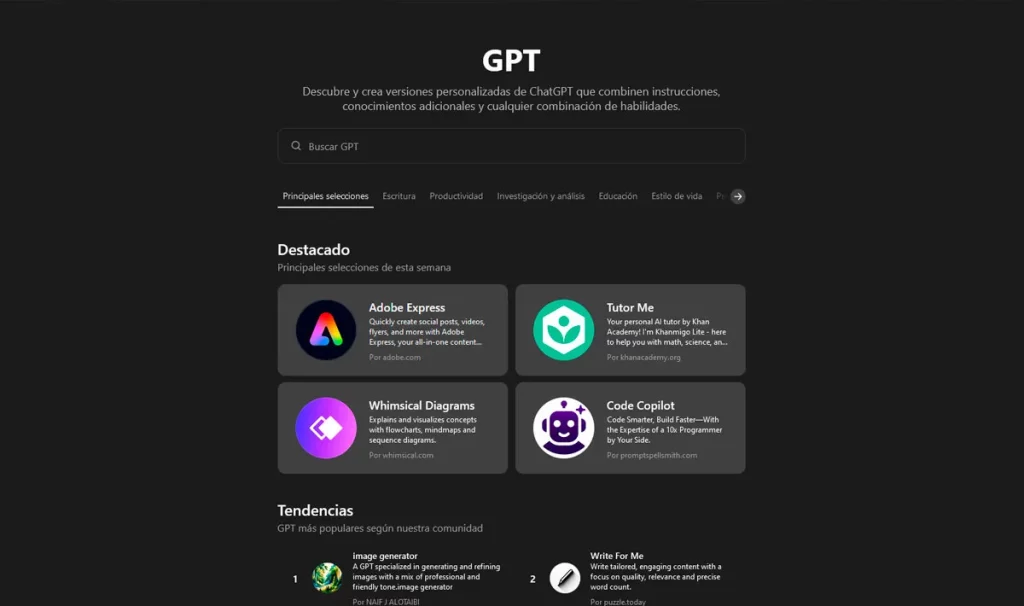
How Do Custom GPTs Work?
The operation of a custom GPT is based on the same transformer technology used by general GPT models. However, the difference lies in the fact that custom GPTs can be specifically adjusted to align with the goals, needs, and particular context of each user or business.
Customizing these GPTs not only involves modifying some basic parameters but also allows the integration of proprietary data and information sources, adjusting the responses to a specific audience or task.
1. Model Parameter Adjustment
Adjusting parameters is one of the key aspects of customizing a GPT. Depending on the specific need, users can modify how custom GPTs generate responses. This includes controlling the tone, length of responses, and the complexity of the generated texts.
For example, if a company needs a GPT to create product descriptions for its online store, it can configure it to generate brief and concise descriptions. However, if the goal is to create more detailed content, such as blog posts, the GPT can be adjusted to generate longer and deeper texts.
Additionally, users of custom GPTs can modify how the model responds to questions and how it organizes information. The parameters of custom GPTs can also influence the model’s ability to follow instructions and make contextual assumptions, which is essential when used for complex tasks requiring a high degree of accuracy.
2. Integration of Specific Data
The real advantage of custom GPTs lies in their ability to integrate specific and contextual data. By providing the model access to internal databases, reports, spreadsheets, or any other relevant information, the custom GPT model can generate responses based on real and updated data.
This customization capability of custom GPTs is especially useful for specialized tasks that rely on accurate and up-to-date information, such as financial analysis, digital marketing, or customer service.
For example, an insurance company could integrate its database of policies and clients into the model, allowing the GPT to offer personalized responses about coverage, prices, or the status of customer claims. In the case of a real estate agency, a custom GPT could access property databases to answer queries about availability, prices, and housing features.
3. Setting Specific Guidelines and Instructions
Users of custom GPTs can precisely define the guidelines on how the model should behave. This includes configuring the tone, style, and type of response desired. Furthermore, limits can be set on the areas of knowledge, ensuring that custom GPTs do not deviate from the topic or provide out-of-context responses.
For example, a company that wants to use the GPT to answer customer queries on its website could configure it to maintain a friendly and approachable tone, while a financial consulting firm might request responses with a more formal and professional tone. This ability to adjust the behavior of AI according to specific communication or interaction needs is an important added value.
Benefits of Custom GPTs
Custom GPTs not only allow for greater precision and efficiency but also bring a range of key benefits that can transform how businesses operate. Below are some of the main benefits that can be obtained from using custom GPTs.
1. Improvement of Operational Efficiency
One of the most notable benefits of custom GPTs is the automation of processes. Many tasks that previously required human intervention, such as content generation, customer service, or data analysis, can now be efficiently automated. This not only reduces the time spent on these tasks but also increases the overall productivity of the business.
For example, in digital marketing, a custom GPT can generate ads, write social media posts, or draft blog articles in just a few minutes. This frees up time for marketing teams to focus on strategy and creativity without worrying about the repetitive writing tasks.
2. Greater Precision in Specialized Tasks
Another key benefit of custom GPTs is their ability to provide specialized responses. By integrating the model with proprietary and relevant data sources, a GPT can be trained to offer more precise and specific responses in specialized areas. This is especially useful in sectors such as healthcare, law, or engineering, where the level of detail and accuracy is critical.
For example, a custom GPT trained with legal information could help a lawyer review contracts or search for legal precedents. Similarly, a model trained with technical data could offer specific solutions to complex problems in fields like engineering or programming.

3. Adaptation to Style and Tone
Custom GPTs also allow for greater flexibility in the style of responses. This is especially important when seeking to maintain a consistent brand voice. Businesses can configure custom GPTs to generate responses that align with the tone and style they wish to convey to their customers.
For example, a company offering luxury products might ask the model to maintain a more sophisticated and formal tone in all its interactions. On the other hand, a brand targeting a younger audience might opt for a more casual and friendly tone. This ability to customize style and tone improves the consistency and effectiveness of communication.
4. Optimization of Customer Experience
Using a custom GPT can significantly enhance the customer experience. An AI-powered chatbot can offer quick and accurate responses to customer inquiries, reducing wait times and increasing user satisfaction. Moreover, custom GPTs can learn and adapt over time, continually improving their ability to understand and resolve customer needs.
For example, a custom GPT on an e-commerce site could answer product questions, handle returns, or even make recommendations based on the customer’s previous purchases. This ability to personalize the customer experience on a large scale with custom GPTs is a significant advantage in sectors like retail and customer service.
5. Cost Reduction
Another important benefit is the reduction of operational costs with custom GPTs. By automating tasks that would normally require human intervention with custom GPTs, companies can reduce the number of employees needed to perform certain functions. This can generate significant labor cost savings and allow resources to be allocated to higher-value tasks.
For example, a company using a custom GPT for customer service can reduce the need for a large team of support agents, as the AI model can handle a significant portion of inquiries autonomously. This allows human employees to focus on more complex cases that truly require direct intervention.
Main Applications of Custom GPTs
Custom GPTs are used across a wide range of industries and sectors. Below are some examples of specific applications of custom GPTs that are already making a significant impact.
1. Guru GPT: Corporate Knowledge Assistant
Guru GPT is a tool designed to improve workflow within businesses. This model integrates the organization’s internal knowledge, allowing employees to quickly access the information they need without manually searching for it. With Guru GPT, employees can ask questions in natural language and get responses based on internal documents, apps, and chats, improving efficiency and collaboration within teams.
Benefits:
- Instant responses to internal questions.
- Easy access to knowledge bases.
- Integration with tools like Google Drive and Confluence.
2. AI Grammar Checker: Improving Writing
The AI Grammar Checker is an AI tool designed to help users improve their grammar, spelling, and writing style. It is particularly useful for those who write in English as a second language or want to improve the quality of their texts. This custom GPT corrects grammatical errors in real-time and provides suggestions on how to improve writing.
Benefits:
- Correction of grammatical and spelling errors.
- Suggestions for improving vocabulary and style.
- Educational feedback to learn from mistakes.
3. DALL-E: Image and Art Generation
OpenAI's image generator, DALL-E, is a powerful tool that uses AI to create original artwork from textual descriptions. Users can describe what they want to visualize, and DALL-E generates images based on those descriptions. This custom model can be adapted to different styles and themes, making it a useful tool for graphic designers, artists, and content creators.
Benefits:
- Creation of personalized images based on textual descriptions.
- Expansion and modification of existing images.
- Generation of unique art for creative projects.
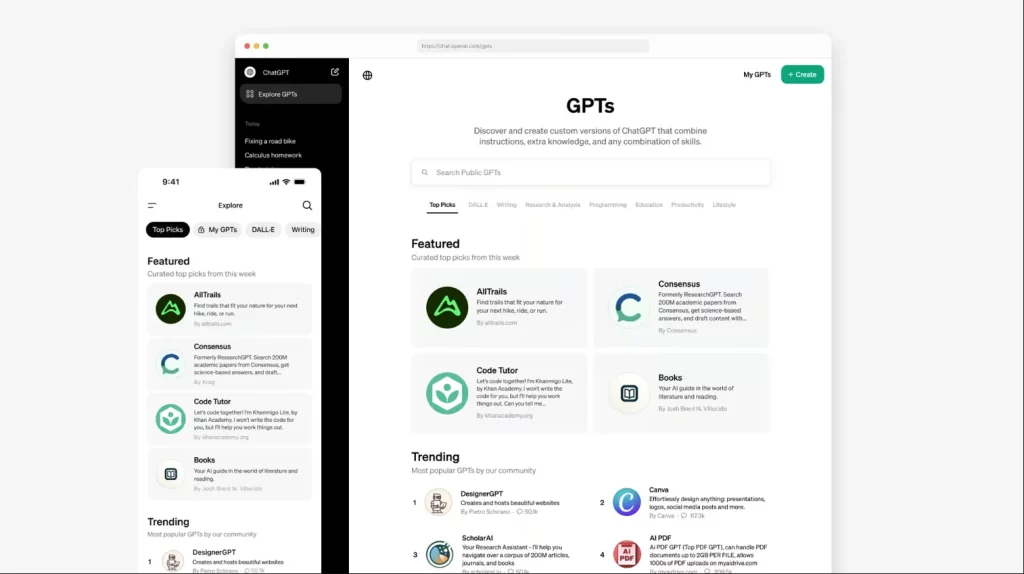
The implementation of custom GPTs in businesses and companies is emerging as a transformative tool offering practical solutions to everyday challenges. The ability of custom GPTs to improve efficiency, reduce costs, and optimize the customer experience is redefining the business landscape.
By enabling deep personalization of interactions and process automation, these custom GPTs allow companies to operate more agilely, cost-effectively, and accurately. This is particularly relevant in a context where competitiveness increasingly depends on response speed and service personalization.
However, while the benefits are clear, the adoption of custom GPTs also involves certain challenges. Companies must be aware of the ethical aspects related to AI usage, such as transparency in decision-making and data protection.
Additionally, the effective implementation of custom GPTs requires a significant initial investment, not just in technology but also in training and change management within the organization. In this sense, it is important for companies to adopt a careful and strategic approach to integrating custom GPTs into their operations, ensuring that the benefits outweigh the costs and that the implemented solutions are sustainable in the long run.
In terms of competitiveness, custom GPTs not only represent a technical advantage but also an opportunity to create unique and differentiated value in the market. Companies that leverage this technology of custom GPTs not only optimize their internal processes but can also offer unique and highly personalized customer experiences.
This approach can be a crucial differentiator in saturated sectors, where service personalization has become a key factor in attracting and retaining customers. Therefore, businesses that strategically invest in custom GPTs will not only be better prepared to face current challenges but will also be positioned to lead in the digital economy of the future.
Finally, the future of custom GPTs is promising, and its evolution is just beginning. As technology continues to improve, new applications are likely to emerge that will further transform both traditional and emerging sectors. Advances in the ability of AI models to understand and generate human language, as well as their integration with other systems and platforms, will further expand customization possibilities.
Companies that succeed in adopting these advancements early and effectively will be one step ahead in creating innovative and sustainable solutions. Therefore, it’s not just a good time to explore the advantages of custom GPTs but also to reflect on how this technology can harmoniously integrate the long-term values and goals of each organization.
If you want to learn more about custom GPTs and how to implement them in your company to streamline your processes, write to us at [email protected]. We have a team of digital marketing experts in the use of custom GPTs to guide you.
 EN
EN  ES
ES